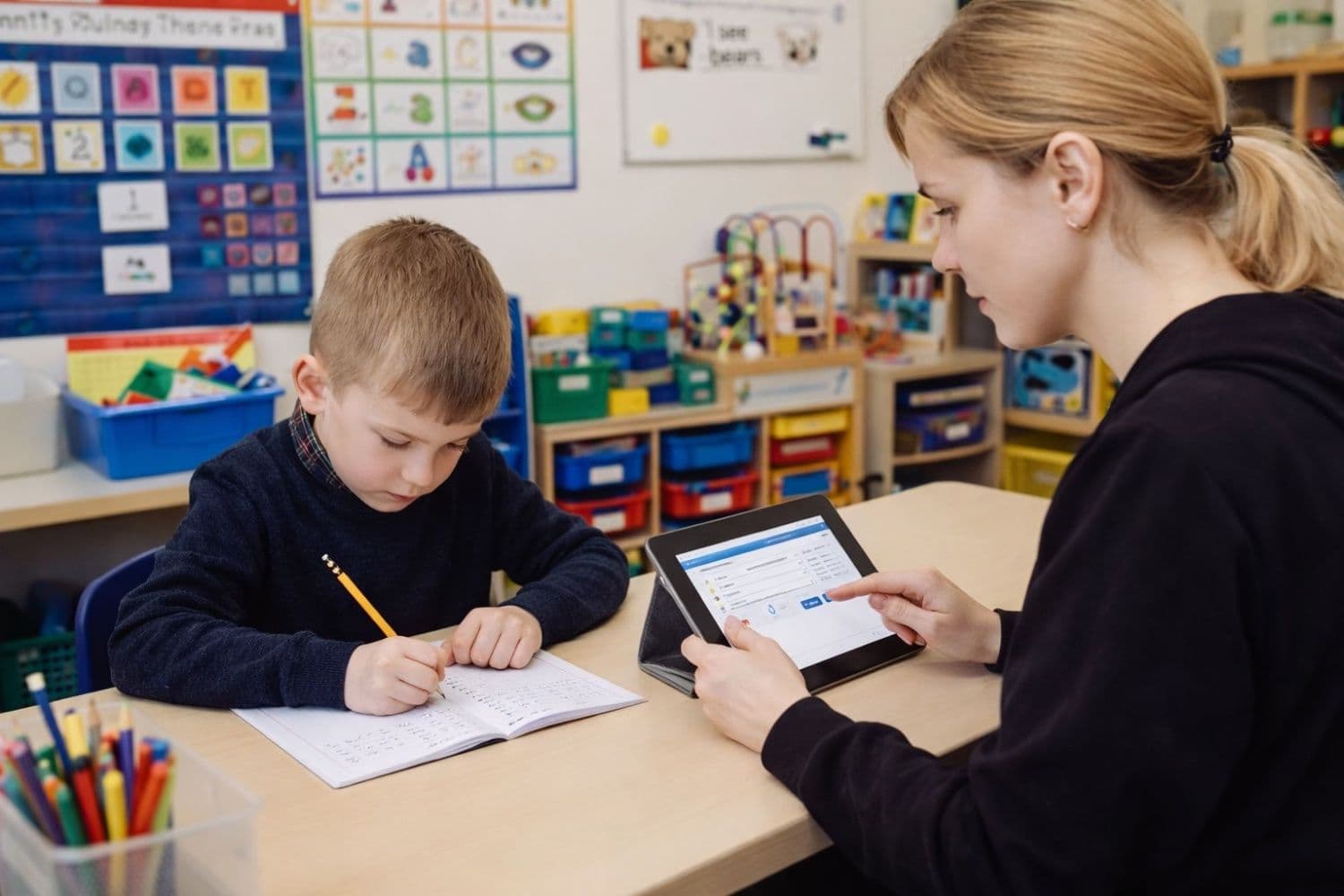
A classroom aide finishes a reading intervention block and marks a few trial results on a printed sheet. Later in the afternoon, those numbers are typed into a spreadsheet. At the end of the week, the spreadsheet is summarized for a progress update.
Nothing about this process is unusual. In many special education programs, data collection still moves through a familiar chain of tools: paper binders during sessions, spreadsheets for storage, and Google Forms for occasional quick entry.
Because the process feels routine, the system itself rarely gets examined. Yet the way data moves through these tools can subtly reshape how progress appears later. The sections below examine several ways traditional data systems influence what educators ultimately see.
Instructional Context Gets Lost in the Data
During a session, a student might demonstrate a skill after several attempts, respond differently depending on prompts, or complete the task successfully only after the instructions are rephrased. These details often shape what the data point actually means.
Traditional tools rarely capture that context.
A “4/5” result remains visible, while the conditions that produced it are often left behind.
This separation also creates practical challenges for educators. When instructional details are recorded in different places or remembered later, teams often spend additional time:
- locating session notes across multiple documents
- verifying that data records meet documentation requirements
- preparing explanations for parents or caregivers about how progress occurred
Reviewing the numbers later can feel like trying to understand a conversation by looking only at timestamps.
How Documentation Tools Simplify Observations
When data entry requires manual typing or formatting, the natural tendency is to simplify what gets documented. Observations gradually shrink into easier-to-enter formats.
For example:
- Prompt hierarchies may be reduced to simple accuracy scores
- Behavioral context might be omitted to keep entries quick
- Strategy changes during sessions may go unrecorded
- Partial successes may disappear behind binary outcomes
This is not oversight; it is an adaptation to the limitations of the tool.
Delayed Data Entry Changes How Progress Appears
Because spreadsheets and forms are easiest to update in batches, many teams develop routines where data is entered later, such as:
- once several sessions have accumulated
- after the day’s interventions conclude
- during end-of-week documentation or reporting
What seems like a small delay can gradually change the relationship between instruction and measurement.
Instead of data informing instruction in near real time, documentation begins to follow the calendar. The same delay can also affect how progress is visualized. Data scattered across spreadsheets, paper sheets, and forms often needs to be manually compiled before a graph can be produced. By the time those visualizations are created, they may appear late or fail to reflect how performance actually changed across sessions.
Valuable Observations That Never Enter the Data System
In many special education environments, valuable observations occur outside formal data collection moments.
- A paraprofessional notices that a student independently uses a communication device during lunch.
- A therapist observes improved task persistence during a transition activity.
- A teacher sees a skill appear spontaneously during group work.
These moments often remain undocumented, not because they lack importance, but because traditional systems make them difficult to capture quickly.
Spreadsheets expect structured entries. Binders assume formal sessions. Google Forms require navigating a separate interface.
As a result, some indicators of generalization never enter the data system.
Team Insights That Stay Outside the Data
In multidisciplinary teams, student progress is often discussed in meetings, quick hallway exchanges, or message threads.
These conversations can contain the richest insights about student learning. Traditional tools, however, rarely hold those insights alongside the data itself.
A behavior specialist might notice that a student’s accuracy improves when visual supports are introduced. A speech-language pathologist might see that the student responds more consistently when instructions are simplified. Yet these insights often remain attached to individuals rather than embedded in the dataset.
Without a place to capture these insights alongside the data, the reasoning behind progress can disappear over time.
Rebuilding Context from Scattered Records
None of these limitations stop data from being collected. But they create a recurring task many educators recognize: reconstructing the story behind the numbers.
When preparing for IEP meetings or progress reviews, teams often piece together fragments:
- searching through archived session documentation
- locating the original records across different tools
- asking colleagues about specific sessions
- recalling what changed during a particular week
Over time, piecing that context together becomes another source of documentation fatigue for educators.
What Effective Progress Monitoring Systems Capture
Progress monitoring works best when the instructional moment and the measurement remain connected.
When key elements of student progress live within the same system, the dataset begins to reflect the full learning environment rather than isolated outcomes. These elements often include:
- instructional context from the session
- in-the-moment observations
- progress toward individual goals
When those elements are tracked across spreadsheets, paper sheets, and separate forms, maintaining compliance and clear documentation becomes more difficult. Teams may spend time verifying records rather than analyzing progress.
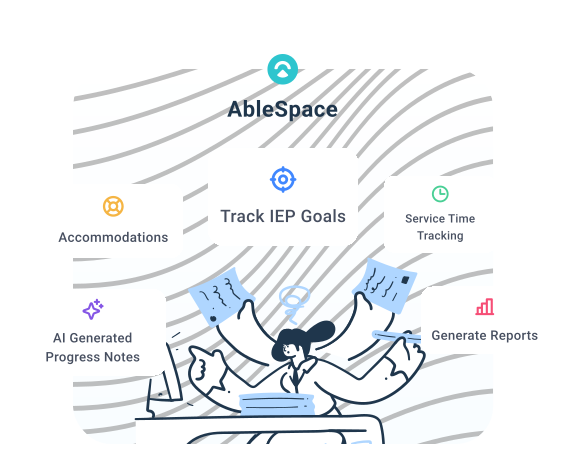
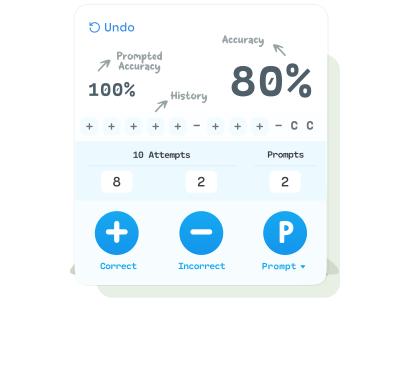
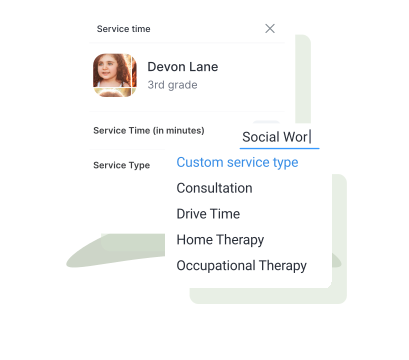
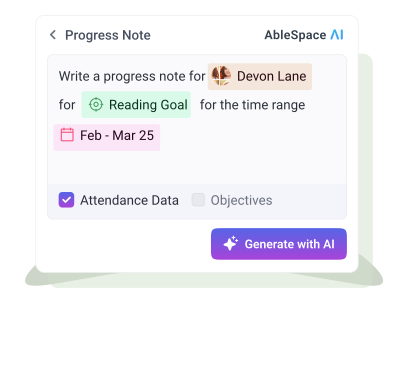
Modern special education platforms aim to remove that administrative burden. Tools such as AbleSpace bring goal tracking, progress notes, and collaboration into a single system, allowing providers to document sessions quickly and generate accurate reports for IEP reviews. Educators using these systems report saving several hours each week while maintaining secure FERPA- and HIPAA-compliant records and sharing daily updates with families through built-in communication features.
Final Review
Special education teams already invest enormous effort in observing students carefully. The real question is what happens to those observations after they occur. If a data system cannot hold the details that give those observations meaning, the insight itself becomes temporary. A well-designed system does more than store measurements; it preserves the small instructional moments that allow those measurements to remain useful weeks or months later.