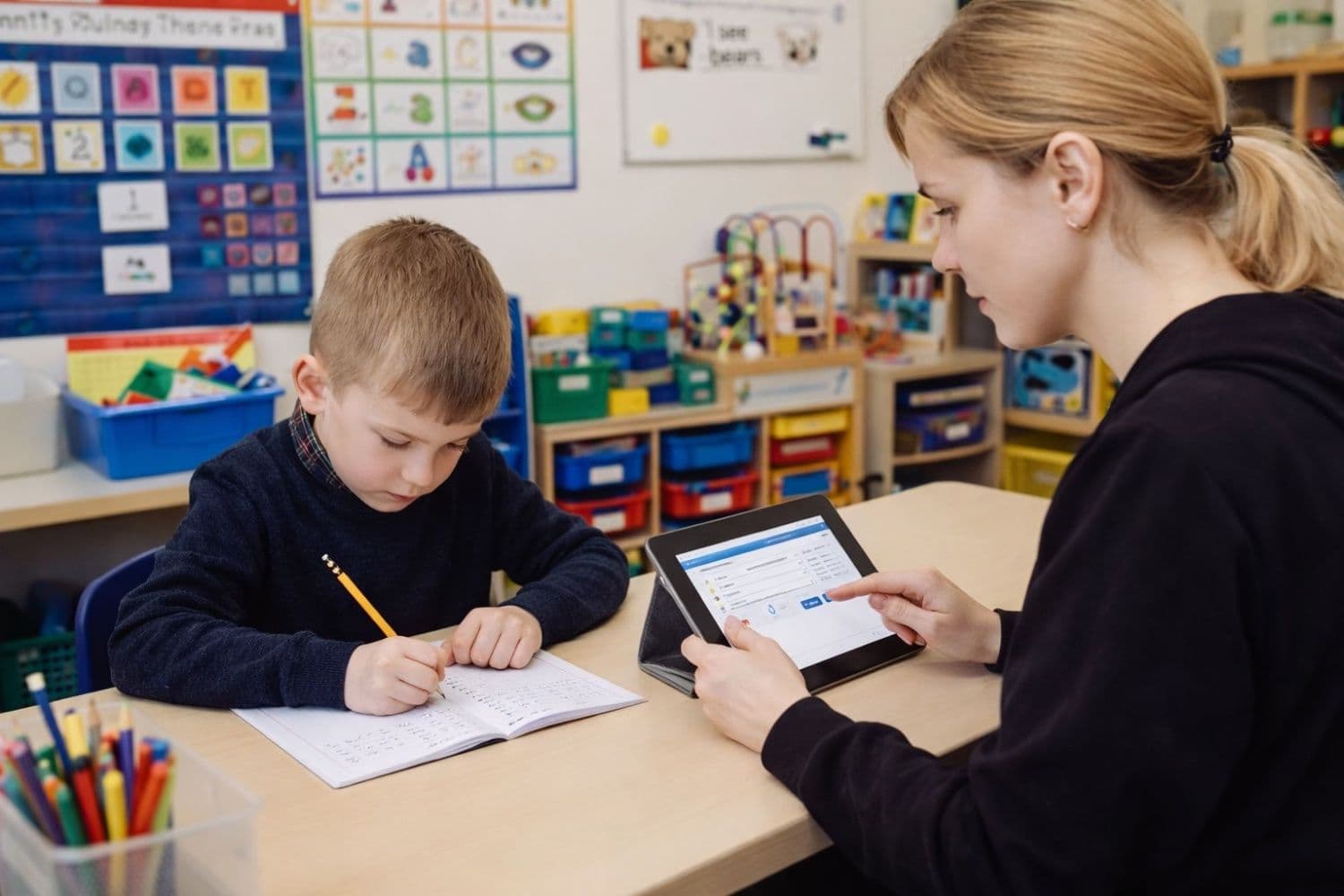
Most special education classrooms run on two parallel timelines. One is visible: the lesson, the prompts, the student working through a task. The other runs alongside it: timestamps, tallies, progress markers that later represent what happened in that session. The challenge isn’t just time. It’s where your attention sits when both demand it at once.
The educators who manage this well aren’t doing more. They’ve changed how these two timelines fit together so one doesn’t keep interrupting the other.
This blog explores how to bring data into your teaching without disrupting it, through lesson design, in-the-moment decisions, and practical tracking systems.
Accuracy vs. Presence: Letting Go of Perfect Data
The demand for precise data can interfere with instruction. When every response needs to be captured, attention shifts away from the student and toward the system.
What matters over time is not perfection, but stability.
- Consistent, slightly simplified data collected across sessions often reveals clearer trends than highly detailed but irregular records
- Over-tracking can pull your attention away from the student at the wrong moment.
- In early skill development, responsiveness matters more than exact counts
The goal is not to capture everything, but to capture enough reliably without weakening the interaction that produces learning.
Designing Lessons That Carry the Data
A key shift is moving data collection into the structure of the lesson itself.
Instead of asking, “When do I record this?”, ask, “Where in this lesson will responses naturally occur?”
- Build predictable checkpoints into activities, moments where responses are expected and easy to observe
- Use task formats that produce clear outcomes (independent vs. prompted, correct vs. incorrect)
- Align tasks closely with IEP goals so you’re not interpreting or translating responses after the fact
Data stops interrupting instruction and begins to sit naturally within it.
Focusing Your Attention: The 80/20 Approach
A common strain comes from trying to monitor too many goals at once. The result is fragmented data that’s difficult to act on.
Narrowing focus can improve both teaching and tracking.
- Prioritize one or two goals per session for active, deliberate data collection
- Rotate secondary goals across the week instead of attempting to track everything daily
- Spend enough time on selected targets to see meaningful patterns, not just isolated responses
This isn’t about neglecting other goals. It’s about giving each one the attention it needs rather than spreading attention too thin.
Capturing Without Disrupting the Interaction
The act of recording can break the rhythm of a session. A pause to write, even briefly, can shift attention away from the student at a critical moment.
The goal is not to eliminate that pause, but to place it more thoughtfully.
- Hold brief observations mentally and record them during natural breaks, such as transitions, material changes, or short pauses
- Use shorthand or simple codes that reduce writing time to a few seconds
- When appropriate, record a set of responses together instead of marking each one individually.
These adjustments preserve continuity. Instruction flows, and data still gets captured without compromising engagement.
When the System Starts Working Against You
There are points when the structure of data collection itself becomes the problem, with unfinished records, delayed entries, or a sense that tracking is always slightly behind.
This is usually not about effort. It’s a sign the system may be asking too much.
- If data is consistently incomplete, the method may be too complex for real-time use
- If student engagement drops when you record, the timing or visibility of data collection may need to shift
- Some sessions, especially those focused on regulation, rapport, or new environments, may not require formal tracking at all
Allowing for flexibility here isn’t a compromise. Not all meaningful progress is immediately measurable.
Building Systems You Don’t Have to Think About
One of the less visible challenges in real-time data collection is decision fatigue. Each time you pause to figure out how to record something, attention is pulled away from instruction.
Reducing that friction changes the experience.
- Use consistent formats, symbols, or tools across students so tracking becomes automatic
- Prepare materials in advance so nothing needs to be set up mid-session
- Keep your system simple enough that it runs on habit rather than active thought
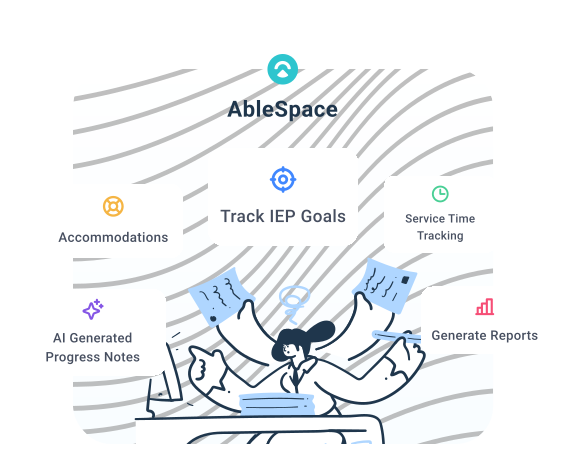
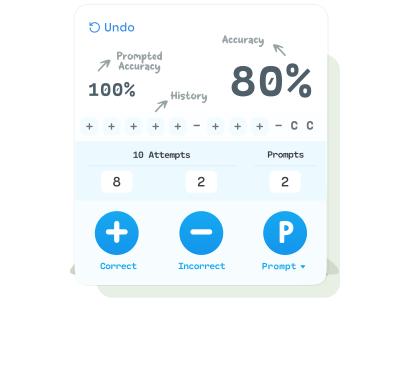
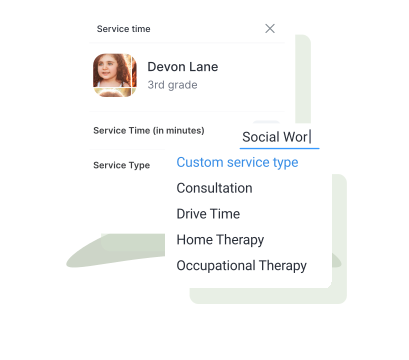
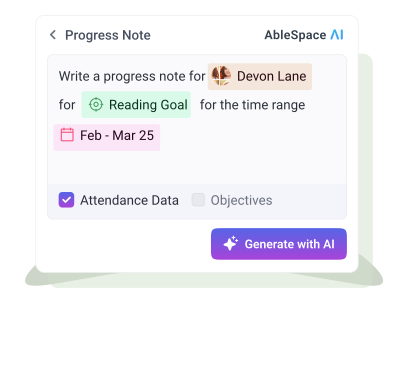
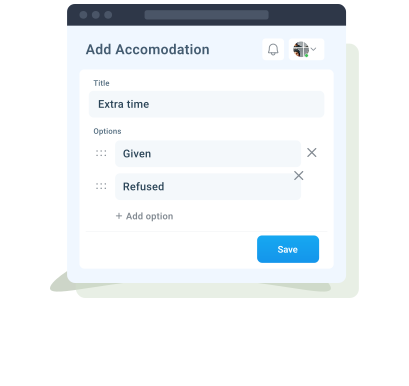
Some systems, for example AbleSpace, remove small decisions that add up during a session. A response can be logged in one tap using pre-set data types such as accuracy, frequency, or duration, while service time and attendance are recorded as part of the session itself. Because the data is already structured as it’s entered, graphs and IEP reports generate automatically, so nothing needs to be rebuilt later.
Conclusion: Bringing It Together After the Session
What happens in the few minutes after a session often determines whether the work you just did will carry forward with clarity or fade into partial notes and memory.
- Fill in anything partial while the details are still fresh
- Add a line of context where a response might otherwise feel unclear later
- Make sure what’s recorded reflects the session as it actually unfolded
It’s an easy step to skip, especially on full days. But this is often where scattered observations turn into something coherent, something you can return to, trust, and build on without starting over.