The meltdown ends. The room settles. The worksheet is still on the desk.
What happens next is often the hardest instructional decision of the day. Move too quickly and the student shuts down again. Wait too long and the lesson drifts further away. Returning to learning is rarely automatic. It has to be built carefully in the moment.Here are practical ways to help students re-enter learning after a meltdown.
1. Recognize That Regulation and Learning Don’t Reset at the Same Time
Students often remain in a recovery state even after visible behaviors such as crying, yelling, or refusal have stopped. During this phase, the brain is still shifting from a stress response back toward a learning-ready state.
Signs a student may still be in recovery include:
- Slow or delayed responses
- Difficulty initiating tasks
- Passive compliance without engagement
- Heightened sensitivity to noise or movement
Instead of treating the end of the meltdown as a signal to resume instruction immediately, treat it as the start of a transition phase focused on gradually restoring the student’s ability to participate.
2. Avoid the “Academic Cliff”
One of the most common missteps after a meltdown is returning the student directly to the task that triggered the escalation.
From an instructional perspective, this can feel like maintaining expectations. From the student’s perspective, it can feel like being pushed back into the source of overwhelm.
A more effective approach is to maintain the learning goal while adjusting the entry point back into the task.
For example:
- If a meltdown occurred during paragraph writing, begin with sentence frames or verbal responses before returning to the original task.
- If a multi-step math worksheet caused frustration, start by working through one problem together before returning to the rest.
- If independent work triggered refusal, shift briefly to supported work with the teacher nearby.
The objective stays the same. What changes is the first step back into the skill.
This adjustment reduces the likelihood of a second escalation.
3. Adjust the Environment Before Reintroducing the Task
A student returning from an escalation may struggle to concentrate if the classroom remains noisy, visually busy, or socially demanding. Even typical classroom activity can feel intense while the student’s regulation system is still settling.
Small environmental adjustments can make the transition back to learning smoother:
- Moving the student temporarily to a quieter workspace or side table
- Reducing nearby materials so only the current task is visible
- Allowing the student to work slightly apart from peers for a few minutes
These adjustments are not long-term accommodations. They simply reduce sensory and social pressure during the re-entry window.
4. Slow the Pace of Instruction Temporarily
After a meltdown, many students need a brief period where expectations remain clear but the speed of the lesson slows down slightly. Rapid transitions, long explanations, or quickly moving through new material can make it difficult for a recovering student to keep up.
A short pacing adjustment can make re-engagement more manageable. This might include:
- Pausing briefly between questions or tasks
- Allowing the student a few extra seconds to respond
- Limiting the number of instructions given at once
- Beginning with review items before introducing new materialAs the student settles and engagement becomes more consistent, the normal pace of instruction can gradually return.
5. Watch for the “Silent Shutdown”
Not all students visibly refuse work after a meltdown. Some appear compliant but are cognitively disengaged.
They may:
- Copy answers without processing them
- Sit with the worksheet for long periods without initiating
- Wait for repeated prompting before responding
This quiet shutdown can easily be mistaken for cooperation.
Before advancing to new material, check whether the student is actually reconnected to the task. Asking the student to explain the first step, demonstrate the strategy, or walk through the problem aloud can quickly reveal whether engagement has truly returned.
6. Track Recovery Patterns, Not Just Meltdowns
Behavior tracking often focuses on when meltdowns occur. Equally useful insights come from examining how students return to learning afterward.
Questions worth observing include:
- How long does it typically take the student to re-engage?
- Which types of tasks allow the fastest recovery?
- Do certain supports consistently help the student restart work?
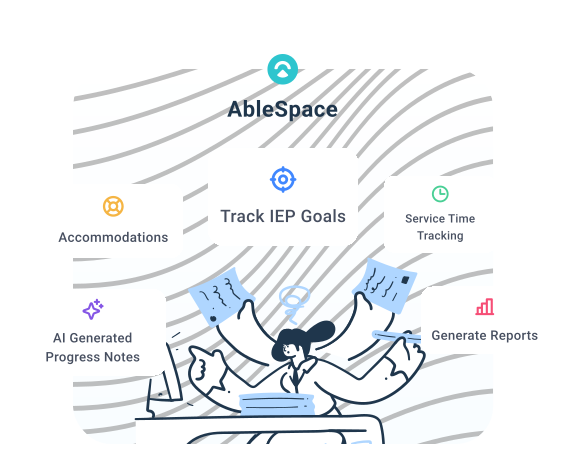
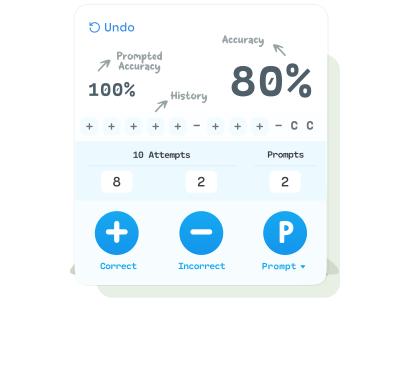
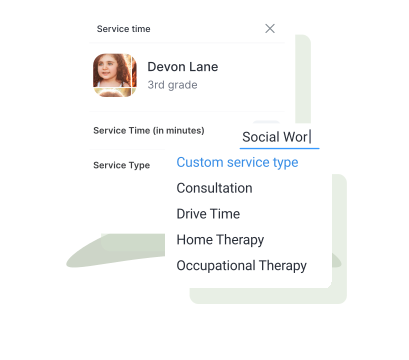
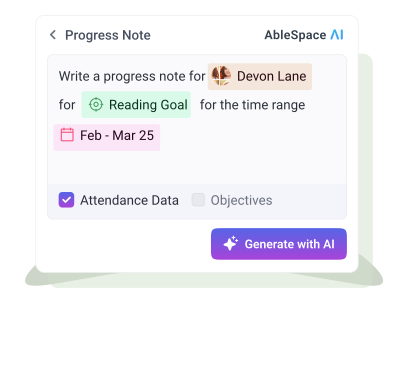
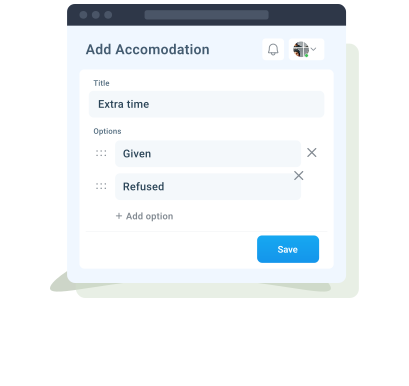
Digital data systems designed for special education can make these recovery patterns easier to see. In tools such as AbleSpace, educators can record meltdowns using frequency or duration data, log accommodations used during re-entry, and attach brief contextual notes about the task or environment.
Over time, built-in graphs and reports reveal which strategies shorten recovery and which classroom demands consistently lead to longer disruptions.
Final Word
Many students measure school not by their hardest moments, but by what happens afterward. When recovery is structured and predictable, students begin to see that a difficult moment doesn’t erase their ability to succeed in the lesson. That understanding becomes a powerful foundation for long-term academic resilience.