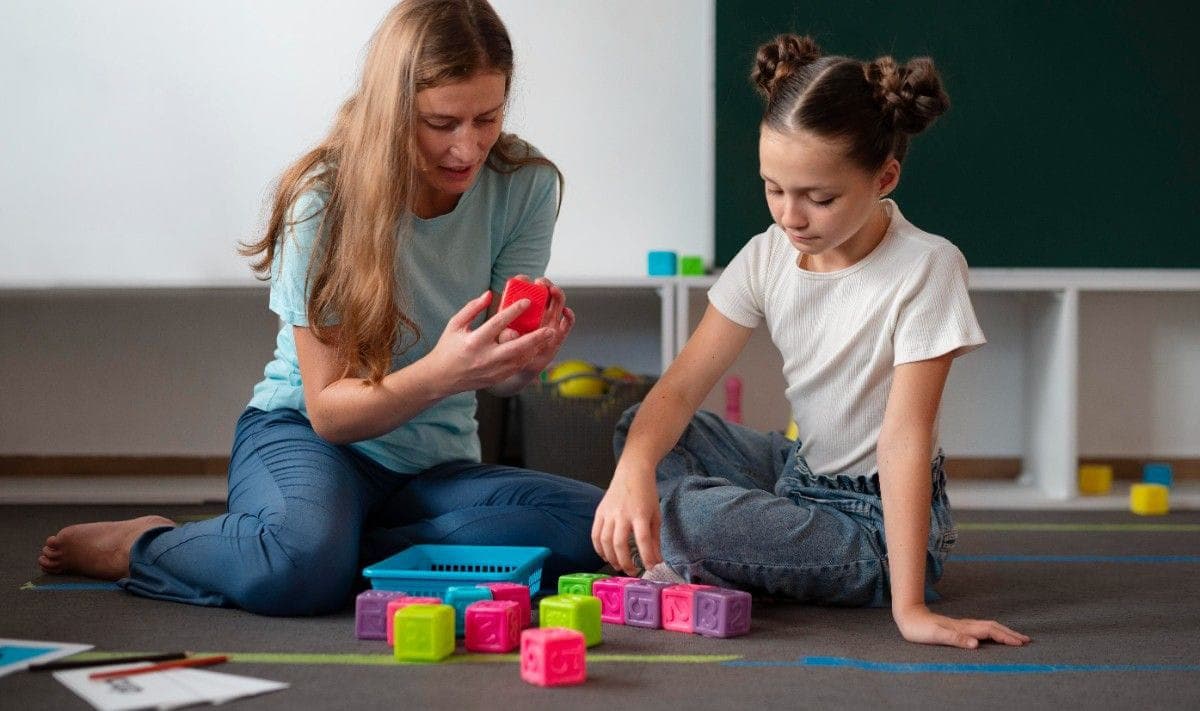
OT activities have a funny way of appearing ordinary.
When everyone else only sees a kid playing with bubbles, climbing, scribbling, or pretending to feed a stuffed animal, the OT sees all the layers.
Grip. Coordination. Regulation. Motor planning. Attention. Visual tracking. Independence. Confidence.
That's the true beauty of occupational therapy; the activity may be simple, but the purpose behind it is anything but so.
In this article, we'll be breaking down some occupational therapy activities and fine motor activities that support actual participation, not just “cute therapy ideas.”
What Occupational Therapy Activities Actually Support
1. Participation In Daily Routines
Many families inquire about what an occupational therapist does for their child. Here's the answer: OTs help kids participate better during daily routines.
Now this can include holding a crayon, sitting for circle time, making use of scissors, opening snacks, tolerating messy play, transitioning from one activity to another, or completing classroom work with less assistance.
Children normally need OT activities when motor, sensory, attention, self-care, or classroom participation skills begin to affect their daily life.
2. Development of Functional Skills
Occupational therapy activities that are truly meaningful aren't just random “busy hands” tasks. They are particularly selected because they target a certain skill.
For example, peeling stickers can support pincer grasp, spray bottles can help develop hand strength, crawling through a tunnel can strengthen body awareness, and copying shapes can aid in the development of visual motor integration.
OT vs PT: What’s the Difference?
1. Occupational Therapy vs Physical Therapy
Some people wonder what the difference between occupational therapy and physical therapy is. So, let's clear this up.
Physical therapy is usually about movement, balance, strength, walking, posture, and overall mobility. But occupational therapy is intended to help kids stay more involved in day-to-day activities (such as dressing, writing, eating, playing, regulating, and using classroom tools).
2. Where OT and PT Overlap
The difference between occupational vs physical therapy can sometimes get blurred. After all, both may support strength, coordination, posture, and motor planning.
However, keep in mind that OT usually links those skills to daily participation. PT, on the other hand, tends to focus more directly on physical movement and mobility. So, OT vs PT often comes down to function versus movement, though both are equally important.
Fine Motor Activities for Toddlers and Preschoolers
1. Hand Strength Through Play
Fine motor activities for toddlers and preschoolers should feel enjoyable (and not like drills). These are activities that help children use the small muscles in their hands and fingers for skills like grasping, pinching, squeezing, releasing, and controlling objects.
Playdough is a great example. Kids can roll it, pinch it, flatten it, poke it, cut it, or hide small objects inside it. Clothespins, pop beads, tongs, spray bottles, and tearing paper can also build strength in natural, engaging ways.
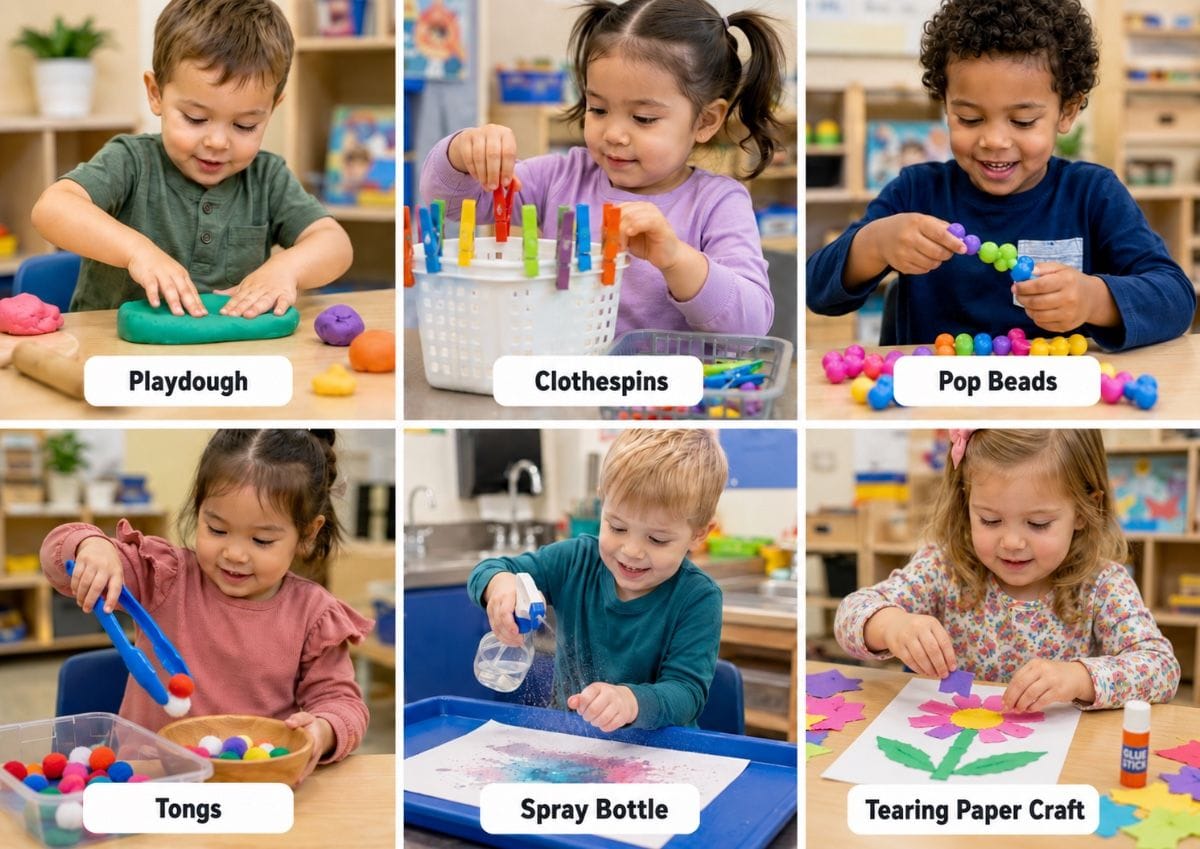
These simple activities of fine motor skills can help children with writing, cutting, feeding, dressing, and classroom tool use!
2. Grasp and Finger Control
Once children begin building strength, the next layer is control. Short crayons, stickers, pegboards, coins, lacing cards, small blocks, and button boards can all help children practice pinching, placing, rotating, and coordinating their fingers.
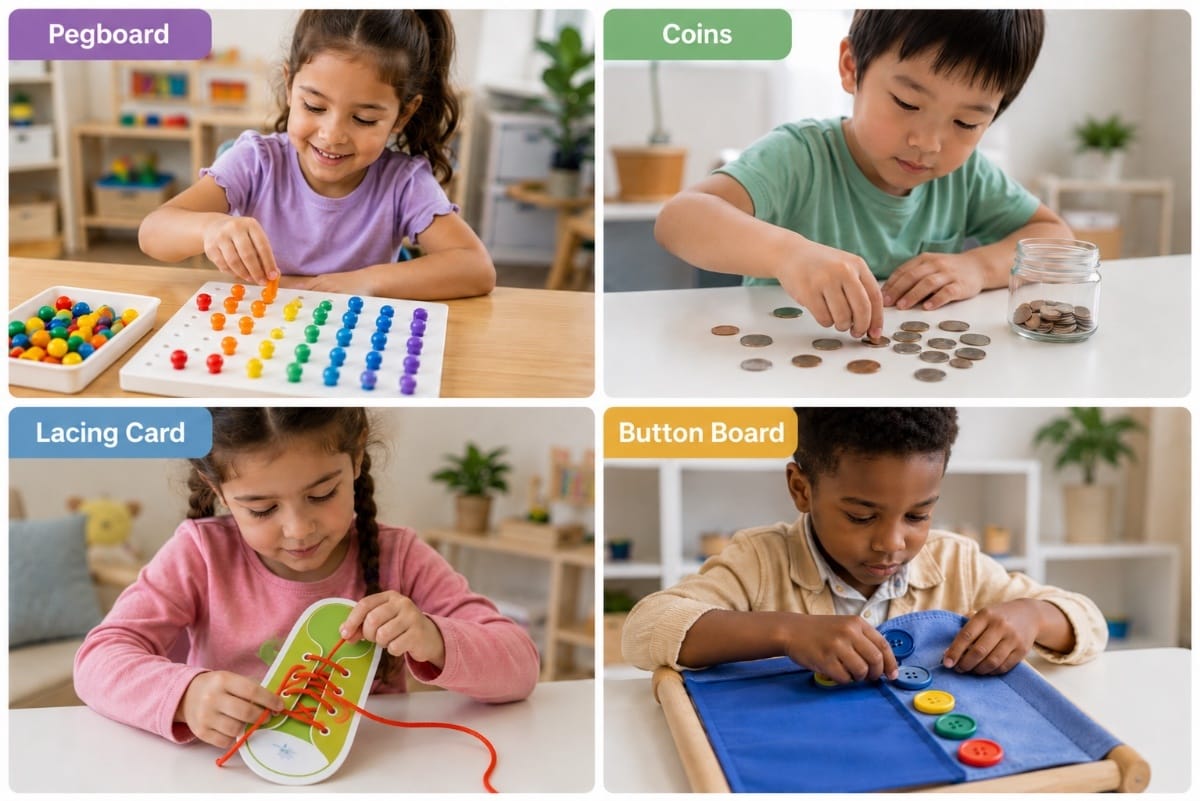
A good fine motor skills activity is not just about keeping their hands busy. It should also let them use their fingers with more purpose and precision.
3. Fine Manipulative Skills
Fine manipulative skills are the small, precise hand and finger movements used to control objects.
Children use these skills when they button a shirt, zip a jacket, turn pages, pick up beads, open containers, use scissors, or adjust a pencil in their hand.
Fine Motor Activities for School-Age Students
1. Keep Activities Age-Respectful
Older students may still need fine motor skills activities. However, the activities must feel appropriate for their age level.
Instead of preschool-style tasks, school-age students can work on organising folders, using a ruler, cutting project pieces, highlighting key details, hole punching papers, folding materials, building models, or managing classroom supplies.
All of these are still fine motor activities, but they feel more connected to real school participation.
2. Use Classroom Routines
Some of the best fine motor practices already exist in the school day.
Opening marker caps, sharpening pencils, using glue sticks, turning pages, packing a backpack, handling lunch containers, and sorting papers all need fine motor coordination.
By practising these skills in real routines, you can see whether a student is capable of using the skill when the classroom is chaotic, busy and hard to predict.
3. Use Worksheets With Purpose
Fine motor worksheets can be pretty useful if they include purposeful tasks like mazes, cutting paths, tracing lines, pre-writing strokes, or visual scanning.
However, worksheets should not be your entire intervention. A worksheet may show pencil control on paper, but it won't really show whether a child can manage tools, open containers, dress independently, or participate in a classroom routine.
Visual Motor Activities for Classroom Participation
1. Eye-Hand Coordination
Visual motor activities allow children to coordinate what they see with how their hands and bodies move.
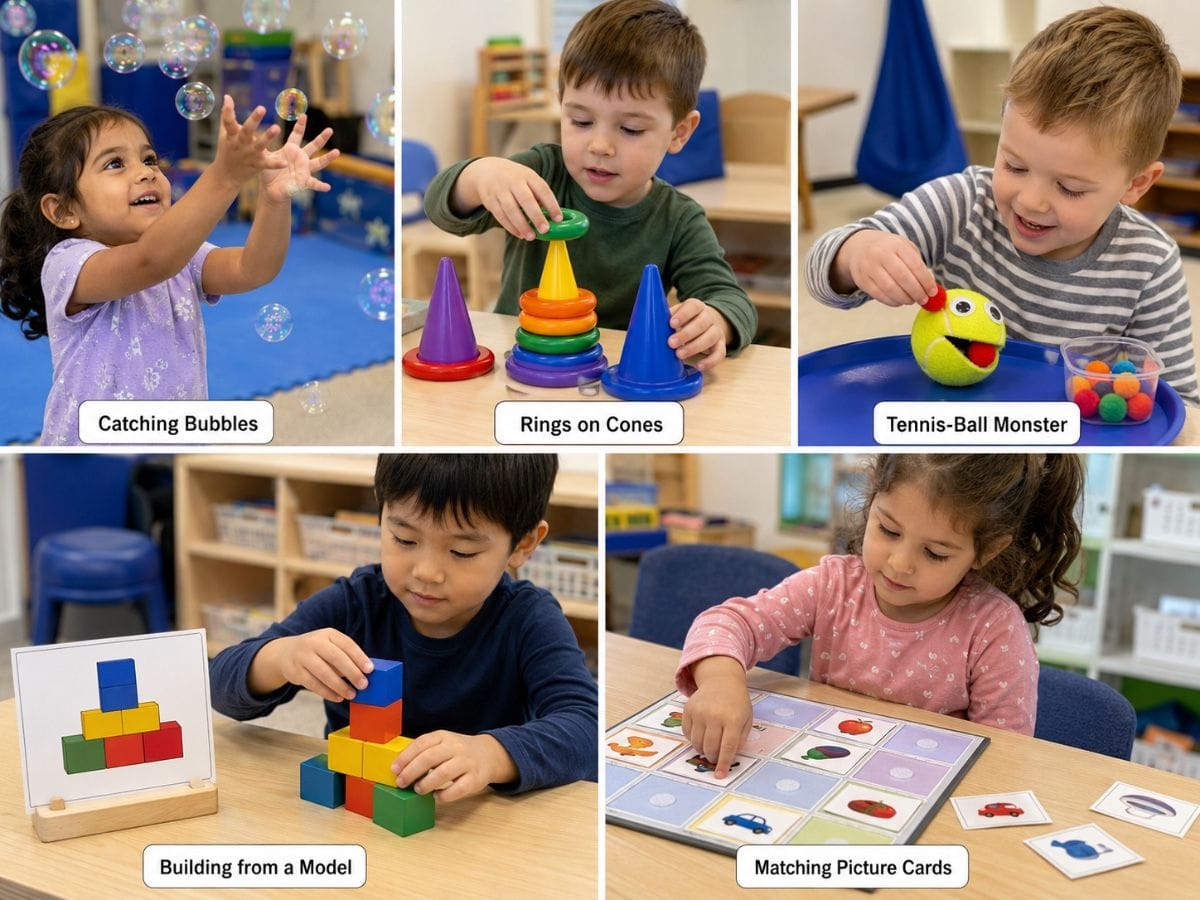
They help with handwriting, copying from the board, cutting, puzzles, spacing, drawing, and using classroom materials. Thus, tasks that involve catching bubbles with both hands, placing rings on cones, feeding a tennis-ball “monster,” building from a model, sliding puzzle pieces into place, or placing picture cards on matching spots can all support visual motor development.
2. Movement-Based Visual Motor Work
Visual motor activities do not necessarily have to happen at a desk.
Beanbag toss, balloon tapping, rolling a ball to a target, stepping on colored spots, and simple obstacle courses can improve children's tracking, timing, coordination, and motor planning, too.
So, if you work with students who don't like seated tasks, movement-based activities might be a better choice to begin with.
Fine Motor Skills and Gross Motor Skills Work Together
1. Gross Motor Skills provide the Hands a Stronger Base
Gross motor skills are the larger body movements children use to sit, stand, walk, run, jump, climb, balance, crawl, and move through space. These skills involve larger muscle groups in the core, shoulders, arms, and legs.
They matter because the hands do not work in isolation. A child may struggle with handwriting, cutting, colouring, or using classroom tools because of weak core strength, poor posture, low shoulder stability, fatigue, or difficulty sitting upright.
Thus, before hoping for precise hand control, OTs normally look at seating, posture, body stability, and regulation.
2. Gross Motor Activities That Support Fine Motor Work
Some children find fine motor work easier after they're done with movement-based activities that help organise their bodies first.
Examples include animal walks, wall pushes, crawling through tunnels, scooter board activities, chair push-ups, carrying a weighted basket, pushing a loaded cart, or doing wheelbarrow walks with adult support.
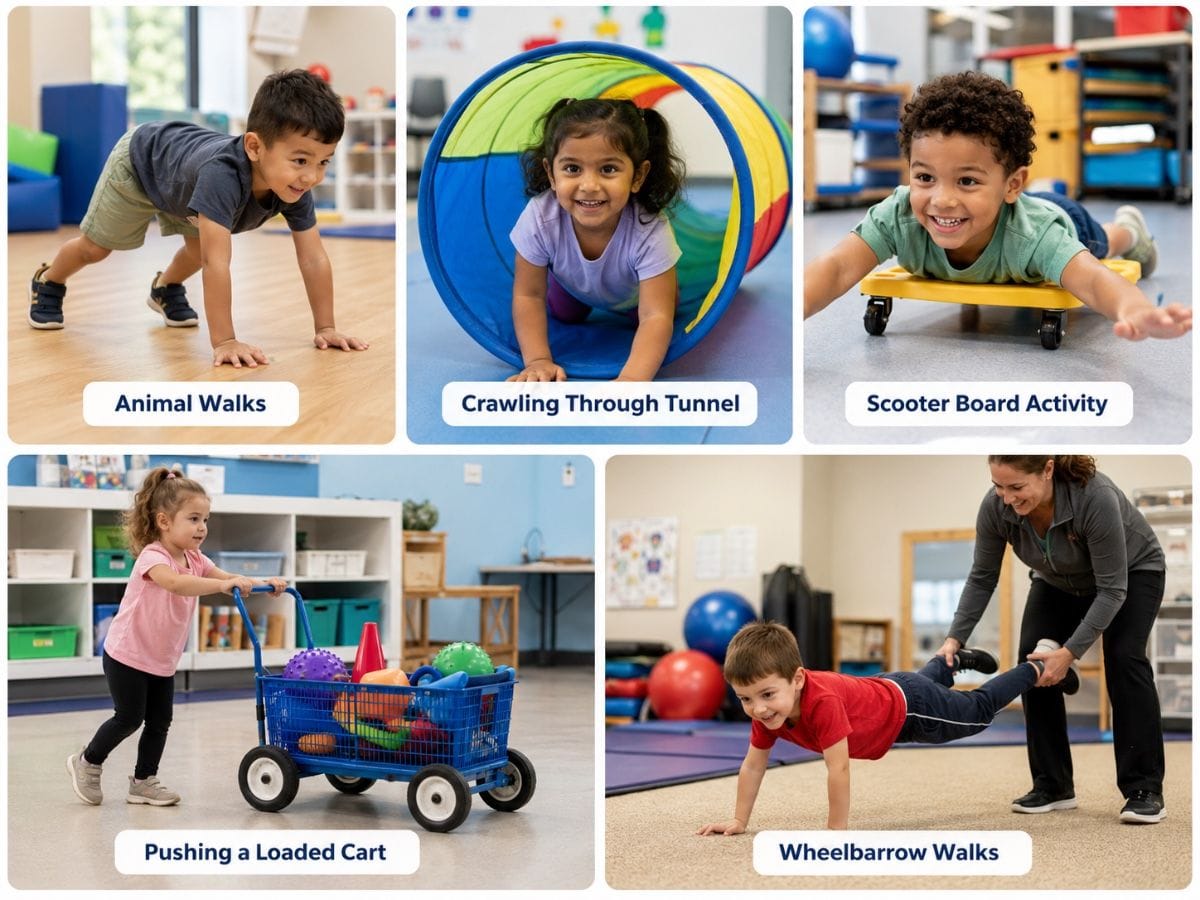
These activities can support posture, shoulder stability, coordination, body awareness, and readiness for seated tasks like writing, cutting, or tracing.
Occupational Therapy Ideas for Autism
1. Use Predictable Structures
Some autistic children have an easier time participating in activities that are predictable. Visual schedules, first-then boards, clear routines, and activities with proper beginning and end points can help with their anxiety and encourage them to stay more engaged.
2. Respect the Child’s Sensory Profile
When thinking of good occupational therapy ideas for autism, you should also look at the child’s sensory profile.
One child may benefit from deep-pressure input (like squeezing a therapy putty ball or pressing hands into a cushion) before table work, while another may like a quieter space with softer materials or less visual distraction.
So, forcing each child toward the exact same activity isn't really a wise thing to do.
3. Support Play and Social Participation
Try engaging kids in shared play, parallel play, turn-taking, choice-making, and special interest-based activities. That's one way to make sure you aren't forcing unnatural interaction.
After all, the goal here is to make sure the child communicates and connects in a way that feels organic and accessible.
4. Utilise The Child's Interests To Develop Motivation
If a child has some specific interests, use them as a starting point for your OT activities.
For instance, if she loves vehicles, you can pick an activity that requires her to park toy cars in numbered garages, push cars along a taped path, or match vehicles by colour, size, or type.
Occupational Therapy for Children With ADHD
For children with ADHD, OT based interventions frequently assist with regulation, focus, organisation, and task completion. The goal isn't to make the kid " sit still". It is to help them participate with the right assistance.
1. Use Purposeful Movement
Planned, but short movement breaks can be beneficial if they are linked to the classroom routine. Classroom jobs like delivering a note, wiping the board, stacking chairs, or moving materials can give the body input without disrupting learning.
2. Support Attention
If you wish to improve a child's attention span, consider adjusting the task first. Use shorter work periods, visual timers, clear endpoints, reduced clutter, and simpler/fewer choices to make attention more sustainable.
3. Build Organisation Systems
Desk check routines, finished/not finished folders, colour-coded materials, checklist cards, and supply bins can also support independence without relying only on verbal reminders.
How to Improve Fine Motor Skills Without Making It Feel Like Work
1. Match the Challenge Level
If you are wondering how to improve fine motor skills, start by picking the appropriate challenge level. Too easy, and the child will likely lose interest and disengage. Too hard, and the child may avoid the task entirely.
2. Change One Thing at a Time
Small adjustments can make activities easier or harder. You can adjust the tool, size of materials, number of steps, amount of prompting, time required, body position, or visual support.
For example, a thicker crayon makes grasping easier, while a shorter crayon may encourage better finger control. Larger beads may help before trying out smaller beads. A vertical surface may support wrist and shoulder position.
3. Generalise the Skill
A child who can button a dressing board in therapy may still struggle with an actual jacket during dismissal. This is why practising fine motor skills across varied materials, settings, people, and routines matters big time.
Writing Progress Notes for OT Sessions
Progress notes should show more than what activity was completed. They should explain the skill being targeted and how the student performed.
What to Include
A useful OT progress note may include the activity, level of support, student response, data collected, sensory and environmental factors that may have affected the student's ability to complete the task, and the next step.
Example
“Student completed a 4-step obstacle course targeting motor planning and body awareness. Required 2 verbal prompts and 1 visual cue to sequence steps. Improved transition back to the tabletop task within 2 minutes.”
Why It Matters
Strong documentation helps the team understand whether the student is making progress, what supports are working well, and where changes need to be made. This is also where a connected system like AbleSpace can be helpful, especially when OT notes, IEP goals, service minutes, accommodations, and progress data need to stay aligned across the team.
FAQs
1) What are some occupational therapy activities?
Some common occupational therapy activities include playdough tasks, obstacle courses, handwriting practice, visual motor games, sensory regulation activities, dressing practice, cutting tasks, puzzles, pretend play, and classroom routine practice.
2) How many therapeutic activities are included in each occupational therapy session?
There is no fixed number. A session may include one well-developed activity or several shorter activities. What matters is whether the activities match the child’s goals and provide useful info about their progress.
3) How do you document occupational therapy and therapeutic activity?
Good documentation should include the skill targeted, the activity used, the child’s performance, support needed, and changes observed. For school-based OT, it must also connect to the student’s IEP goals or functional routines.
4) Is occupational therapy always activity-based?
Not always, but activity is often central to OT because occupational therapy focuses on meaningful participation. OT may also include consultation, adaptive tools, caregiver coaching, environmental changes, sensory strategies, and progress monitoring.