Social Skills Development in Special Education: Strategies and Activities
Team AbleSpace 6 min read
You've taught the greetings.
Practiced all the basic conversation starters.
Rehearsed how to take turns.
Your student can even manage the whole interaction perfectly during role-play and other social skills activities!
So why does it all somehow go out the window the minute a classmate walks up during recess and asks, "Want to play?"
Well, that's one of the many complex things about teaching social skills.
Knowing what to say when the teacher has deliberately set up the conversation is entirely different from figuring out how to speak when it happens all of a sudden.
And if you've ever seen a student master a skill during social skills lessons but struggle to use it in the real world, you're well aware of what we're talking about here.
The key question is: how do we bridge that gap?
The solution starts with understanding what students need to learn, how you can teach it, and where they can practice it.
What Does Social Skills Development Actually Involve?
Social skills aren't just about saying "hello" to someone, or remembering to say words like please and thank you. They involve a combination of abilities that help students manage interactions, express their needs, and build real connections.
These can include:
- Social communication skills: Understanding conversational turns, recognising tone, asking appropriate questions, and responding to verbal and/or nonverbal cues.
- Social awareness: Recognizing personal space, understanding multiple perspectives, and being able to notice how others respond during interactions.
- Interaction skills: The ability to initiate conversations, join in on group activities, share interests, and navigate disputes.
- Self-advocacy: Articulating feelings of discomfort, establishing boundaries, requesting clarification, and communicating needs clearly.
It's also essential to remember that social competence doesn't need to look the same for each of your students. A student who likes parallel play or communicates primarily using AAC can still engage in meaningful social skills activities.
The goal of a social skills curriculum isn't to make every child follow an identical social script; it's to help them develop foundational skills that support communication, participation, and relationships on their own terms.
1. Start by Breaking Down the Social Skill, Not Just Naming It
"Improve peer interactions" sounds like a clear and reasonable instructional objective. But it doesn't actually tell you what you should be teaching on a random Monday morning.
Broad goals don't tell you much about where a student might require support. So, try breaking the skill into smaller and more observable steps.
Take friendship skills, for example. Rather than treating making friends as one big fat skill, think about the smaller abilities that might be involved:
- Spotting a shared interest with another student.
- Finding a suitable chance to approach them.
- Starting an interaction using speech, gestures, or AAC.
- Responding when the other person says something.
- Knowing when someone is willing to continue the conversation or wants to end it.
Now you have something you can actually teach!
2. How to Teach Kids Social Skills: Strategies Beyond Role-Playing
Role-playing is useful in many ways, but rehearsing the same scripted, pre-planned conversation over and over again isn't enough to prepare kids for every social situation. Here are some other approaches and social skills activities for students that may be worth a look.
A. Video Modeling
Create or use short videos to model a specific interaction. For example, you can show two students joining a board game, requesting to participate, and responding to one another.
At key points, pause the video and ask the student to describe what happened. What did the student say? How did the other person react? What could happen next?
Students can watch the interaction several times before practicing the skill on their own.
B. Social Narratives and Scenario-Based Instruction
Skip generic stories about being kind or taking turns. Use realistic, everyday scenarios that kids might actually come across.
Example: "You're playing a game, and another student says she wants to make some changes to the game's rules. How would you respond?
Discuss different possible responses, including asking questions, suggesting a compromise, or expressing disagreement respectfully.
C. Visual Conversation Supports
Some students know what they wish to say. However, they may still have trouble organising their thoughts and ideas during an actual interaction.
Visual prompts can help in such cases. Create a small conversation card with simple reminders like:
- Ask a question.
- Share something relevant.
- Wait for a response.
- Ask another follow-up question.
These supports can be particularly beneficial for students who benefit from visual structure. They can also be adapted to support students using augmentative & alternative communication (AAC) devices.
D. Scripted Practice With Gradual Fading
Conversation scripts can help students who would otherwise have difficulty initiating an interaction.
For example, a student might practice saying, "Can I play too?" when joining a group of peers.
But don't just stop there. Gradually introduce different situations, responses, and conversation partners. The student should eventually learn to adapt the interaction (rather than simply repeating a single, memorised phrase).
3. Take Social Skills Activities Beyond the Special Education Classroom
Here's a common problem: A student demonstrates a skill perfectly during structured social skills lessons but doesn't use it during everyday situations (like recess or group work).
This is where generalization becomes an essential area of learning. After all, kids will eventually need to make use of newly learned skills with different people, in different environments, and under different circumstances.
So, try incorporating social skills activities into everyday school routines:
- Classroom social skills games: Let kids practice requesting a turn, responding to suggestions, and negotiating game rules during actual gameplay.
- Shared responsibilities: Assign complementary roles during classroom jobs. For example, one student can distribute materials while another organizes them. This creates organic opportunities for children to communicate with each other.
- Lunch and recess: Arrange supported opportunities for students to join social skills games, talk to peers with similar interests, or take part in small-group SEL activities.
- Group projects: Give students meaningful roles that require them to exchange information, ask questions, and make decisions together.
You can also coordinate with gen-ed teachers so students can have access to familiar communication supports across all settings.
As students practice these skills across settings, keeping track of their progress becomes equally important. Tools like AbleSpace can help special educators record IEP goal data, monitor different skill areas, and generate graphs and reports to see how students are progressing over time.
4. Don't Leave Peers Out of the Teaching Process
Social skills activities shouldn't always be an adult-led exercise. Students can also learn a great deal from their classmates, especially when those interactions are thoughtfully supported.
This is where peer-mediated instruction can help.
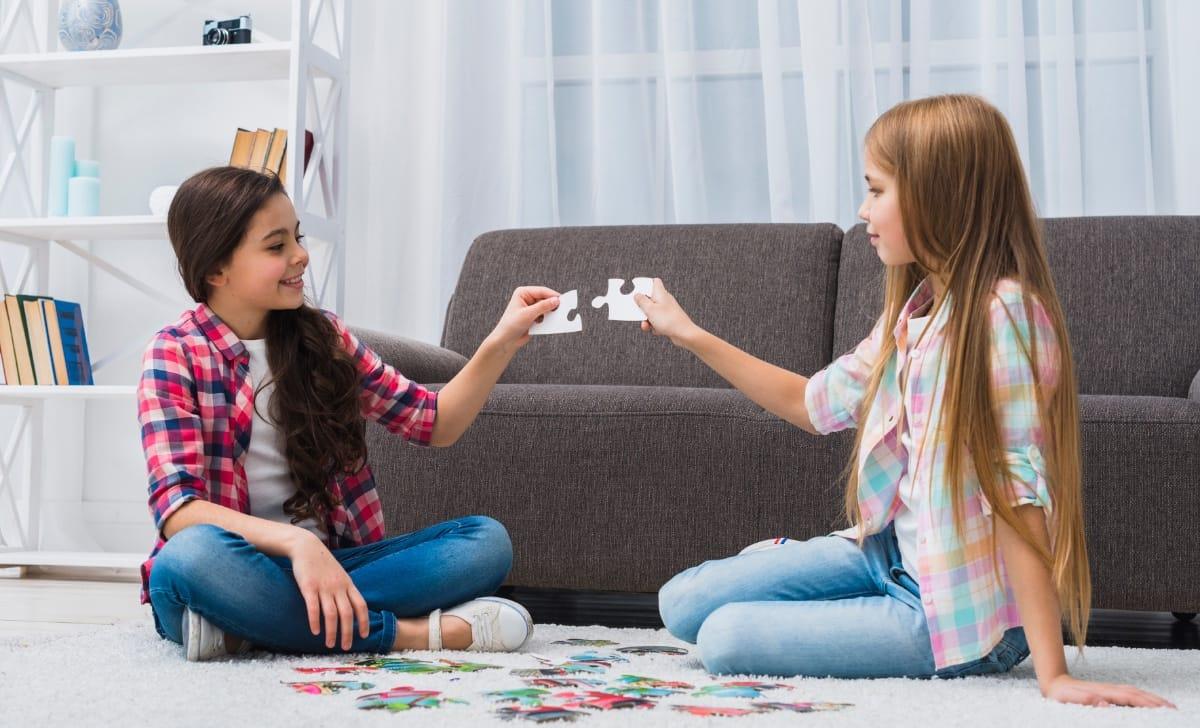
For example, a peer buddy can join a student in a board game or puzzle activity, creating opportunities to practice taking turns, responding to suggestions, and initiating interactions. You can also guide classmates on how to invite others into conversations, give them time to respond, and make room for different communication styles.
An important distinction: Don't make a peer responsible for another student's social development. Both students should be genuine participants, and one student shouldn't have to act as an unpaid assistant.
Also, respect kids who like quieter interactions, smaller groups, or parallel participation. Meaningful social engagement doesn't always have to look like constant conversation.
5. When a Social Interaction Goes Wrong, What Should Educators Do?
Not all social skills activities will go according to your plan. And honestly, that's part of learning!
Instead of immediately correcting the student, try to pause and consider what made the interaction difficult in the first place.
Scenario 1: A student repeatedly interrupts conversations.
Rather than simply saying, "Wait your turn," teach them to recognize conversational pauses. Use short video examples to demonstrate when someone has finished speaking and when it might be appropriate to share their own thoughts.
Scenario 2: A student walks away from a group activity.
Before assuming they're purposely refusing to participate, consider whether the activity is overwhelming, the instructions are unclear, or they need a break. Provide a way to communicate their needs and explore whether a different role would make participation in social-emotional learning activities more accessible.
Scenario 3: A student becomes upset when a peer changes the rules of a game.
Teach practical responses such as asking why the rules changed, suggesting an alternative, or communicating that they would prefer to stop playing.
Ultimately, teaching social skills isn't about making every interaction perfect; it's about helping students feel better equipped to communicate, connect with others, and navigate social situations in ways that work for them.