Imagine it’s early September. Lockers are clicked, buses drop off students, and the day begins, but for a special education teacher, it feels like the real day hasn’t started until hours later. Why? Because behind every calm classroom moment is a frantic battle in digital calendars, spreadsheets, sticky notes, and that familiar tightness in the chest when another scheduling domino is about to fall.
Special education schedules are deceptively complex. They must align services, providers, classroom needs, IEP mandates, student accommodations, and a million little realities that make Google Calendar seem like abstract art. The job isn’t just teaching; it’s time-juggling with real consequences for students and staff.
This isn’t a niche gripe; it’s a systemic challenge that leads to burnout, missed services, and teacher overwhelm. But it can be managed with thoughtful approaches, clear structures, and tools that embrace the real workflow of SpEd teams.
IEPs Aren’t the Starting Point - Capacity Is
Most schedules begin with service minutes, but the real constraint isn’t the IEP. It’s human capacity.
Schools rarely map provider workload in a way that aligns with the actual intensity of certain services. For instance, 30 minutes of push-in literacy support is not equivalent, in planning or execution, to 30 minutes of direct SLP intervention with a student who needs AAC modeling. Yet the minutes appear identical on paper, which leads to overscheduling, hidden overload, and cascading conflicts.
A more accurate approach starts with:
1. Caseload intensity mapping
Not all minutes represent equal effort. Categorizing services by cognitive, behavioral, and preparation load gives administrators a realistic picture of what a provider can actually deliver in a 5-day week.
2. Provider bandwidth profiles
A para supporting a student with high-need behaviors can’t bounce between classrooms every 20 minutes. An OT managing equipment adjustments cannot be treated like a reading interventionist. Real bandwidth mapping prevents creating timetables that are mathematically correct but operationally impossible.
This isn’t theory; districts that adopt capacity-first scheduling see fewer service lapses and dramatically lower staff turnover.
The Hidden Enemy: “Fragmentation Load”
Most teachers describe being spread thin without realizing that the problem isn’t the number of students; it’s the number of switches. Every transition between students, rooms, tasks, or service types carries cognitive and emotional cost.
This fragmentation load is one of the strongest predictors of burnout in special education, yet almost never factored into schedules.
Scheduling with fragmentation in mind means:
- Longer blocks of fewer types of work, rather than scattered micro-interventions
- Structuring days around clusters, not isolated tasks
- Minimizing cross-building travel, one of the most underestimated drain points
- Restricting “interruption windows” so teachers aren’t pulled mid-instruction
The goal isn’t rigid time usage; it’s reducing the mental tax on the human delivering the service.
The Most Underrated Leveling Tool: Predictability Windows
Students with disabilities rely on predictability. But the adults supporting them rely on it, too.
A predictable schedule isn’t just a courtesy; it’s an instructional support. Predictability windows are blocks in the day when:
- Students know what kind of support is coming
- Teachers can plan instruction without guessing who will be in the room
- Providers can deliver services without disrupting core academic routines
These windows turn timetables into coaching tools because they stabilize the learning environment.
Real-Time Visibility Beats Retroactive Patching
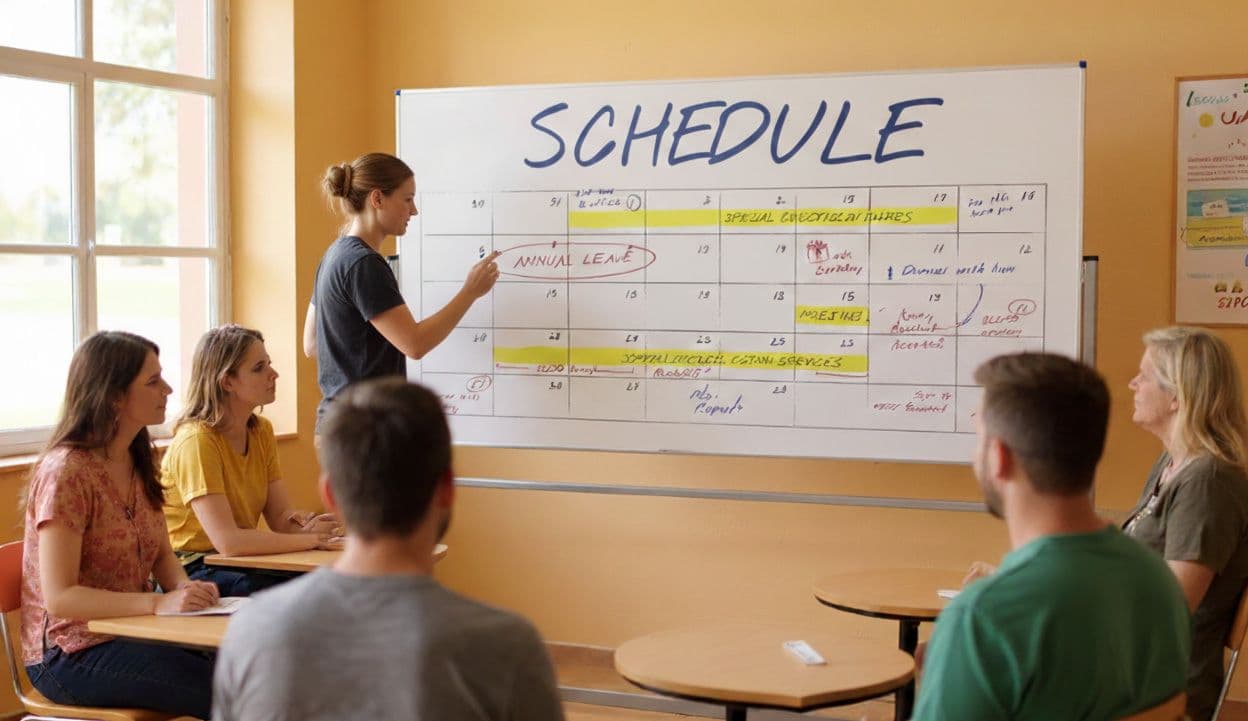
Paper logs, whiteboards, and spreadsheets were never designed for the dynamism of special education services. When teams rely on tools requiring retro-entry or fragmented logging, what happens? Minutes wander into the digital ether, and teachers spend evenings piecing together lost time instead of planning instruction.
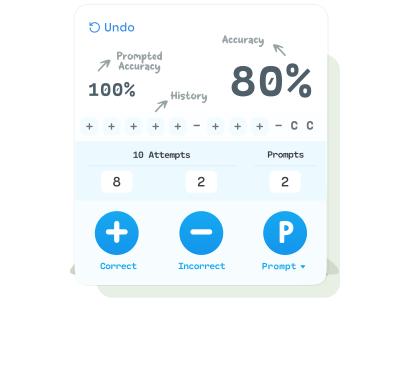
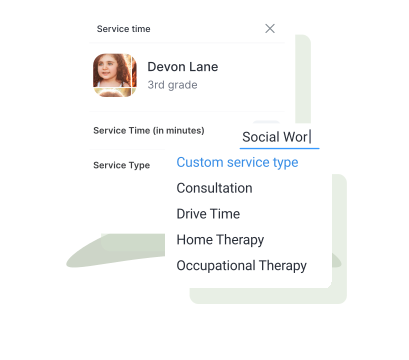
Systems that allow real-time logging, shared visibility across providers, and integrated calendars bring your schedule to life. Teachers can immediately see if a minute wasn’t delivered, if two services conflict, or if a para was pulled for unrelated duties.
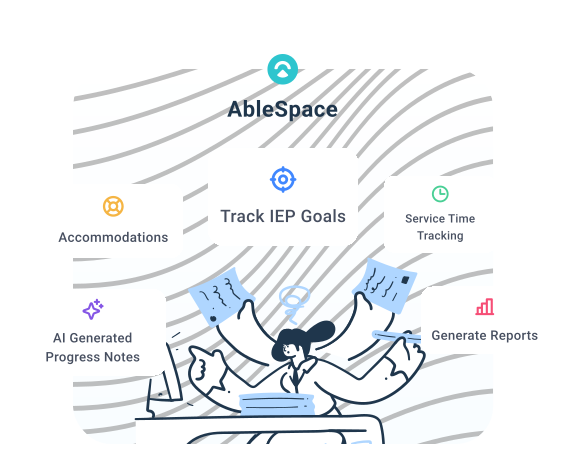
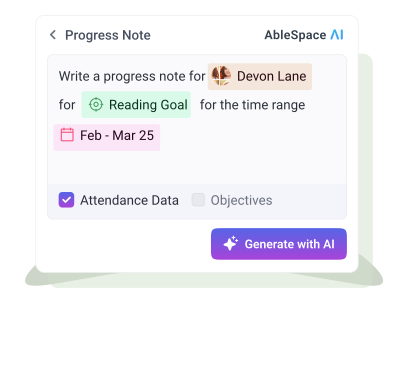
This is where specialized platforms become transformative. Tools like AbleSpace, designed around actual SpEd workflows, prevent “lost minutes syndrome” by keeping schedules, service delivery, and student data interconnected in one place. When schedules aren’t scattered across six tools and three people’s phones, the entire team moves from chasing down information to working from the same clear, up-to-the-minute picture.
Schedule With Your Most Disrupted Students in Mind
Most timetables are built around adults, but stability hinges on the handful of students whose needs disrupt everything else. These aren’t “problem students”; they are schedule drivers.
Designing around them first creates downstream calm for everyone.
Examples:
- If a student has behavioral peaks at 10:30 a.m., scheduling a pull-out literacy session at that time guarantees failure.
- If a student depends heavily on a para, that para cannot be used as a “floating gap-filler” elsewhere.
- If a student requires sensory breaks, anchoring those breaks allows teachers to plan instruction around periods of optimal regulation.
A schedule that stabilizes your three highest-need students ends up stabilizing your entire building.
This approach is counterintuitive, but incredibly powerful.
The Quiet Power of Cross-Provider Micro-Huddles
Most schedule conflicts aren’t born in big meetings; they’re born in the micro-gaps between providers’ assumptions about each other’s time.
A 6-minute huddle between the SLP, OT, and special educator can prevent:
- Overlaps
- Service redundancies
- Missed minutes
- Unintentional double-pulls
- Confusion during absences
These huddles are so effective that many districts mandate them weekly.
Digitally, this same alignment happens when platforms allow providers to see each other’s schedules, who delivered what, and what needs rescheduling, which is why many teams lean on AbleSpace to keep everyone synced without more meetings.
Conclusion: When Schedules Become an Equity Tool
Schedules aren’t neutral. They can unintentionally privilege students with fewer needs and place disproportionate strain on those requiring intensive support, or they can flip that script. When timetables are built with capacity, predictability, and student regulation patterns in mind, they become a mechanism for equity, not just organization. The real transformation is seeing scheduling not as paperwork, but as one of the most powerful equity tools in special education practice.
FAQs
1) How can teams reduce last-minute schedule disruptions midyear?
Build two or three “elastic zones” into the weekly timetable where non-urgent services or make-up minutes can live. Elasticity gives teams a safe buffer that absorbs unexpected behavior incidents, testing periods, or provider absences.
2) What’s the fastest way to spot an unsustainable timetable?
Look for adults who have zero ‘breathing edges’ between tasks. If a provider’s day is a chain of back-to-back micro-sessions, the schedule will collapse long before the school year hits its stride. Sustainable timetables always include small buffers that absorb the unpredictability of real classrooms.
3) What’s one scheduling mistake that silently drains instructional time?
Pulling students during their most cognitively productive minutes. Students have natural peak focus windows, and pulling them at the wrong time can tank both the service and the class lesson.