Have you ever had a student who performs with ease around one adult but falls apart the minute they step out?
This isn’t uncommon. Strong relationships between a student and a specific adult can hint towards increasing loyalty and trust. However, it could also be a warning sign. The student might begin to function only around that particular adult, which will eventually stall progress and generalisation.
This doesn’t mean we must blame the adult or force distance. All we need to do is find a way to protect the student’s ability to function across settings and people.
But before that, let’s see why this happens.
What may be driving the pattern
Students who only respond to one adult often have a trauma history or suffer from anxiety and communication issues.
They stall things until they finally see the same prompt order or hear the same voice. This happens because they find expectations easier to read only around that individual.
Then, there’s also the prompt problem. The trusted adult unknowingly offers so much invisible support that the student doesn’t budge until that exact cue, tone, facial expression, or rescue pattern arrives. Even if another staff member is present and offers similar directions, they constantly ask the same adult for help.
At this point, the relationship becomes more than just a source of comfort.
5 practical ways to build more flexibility and independence
Here are 5 tips that can help you manage students who rely on specific staff members only.
1) Figure out what the student is attached to
- Look beyond the person: Here’s a question to ask yourself: Is the student attached to the adult or the role they play?
Sometimes, kids believe that one adult previews transitions better than everyone else. Some students prefer it when someone uses simplified words and shorter language. Demands that are introduced more calmly and evenly can also make students feel at ease. It may also be because only that one person reduces the task when stress levels are on the rise. - Watch what disappears when the adult leaves: Before planning to change any staff routines, take a generous amount of time to observe the student before any instances of clinginess, refusal, or escalation happen. Know what kind of prompting is being used and what support disappears when that adult steps away.
Remember, behavior is also shaped by what happens around it, not just by personality.
2) Keep rapport, but stop making one adult the gateway
- Keep the relationship, expand the support: A good rapport is never the problem. A student should be able to feel connected to a trusted adult. Removing the relationship entirely would do more harm than good. You just have to find a way to widen it.
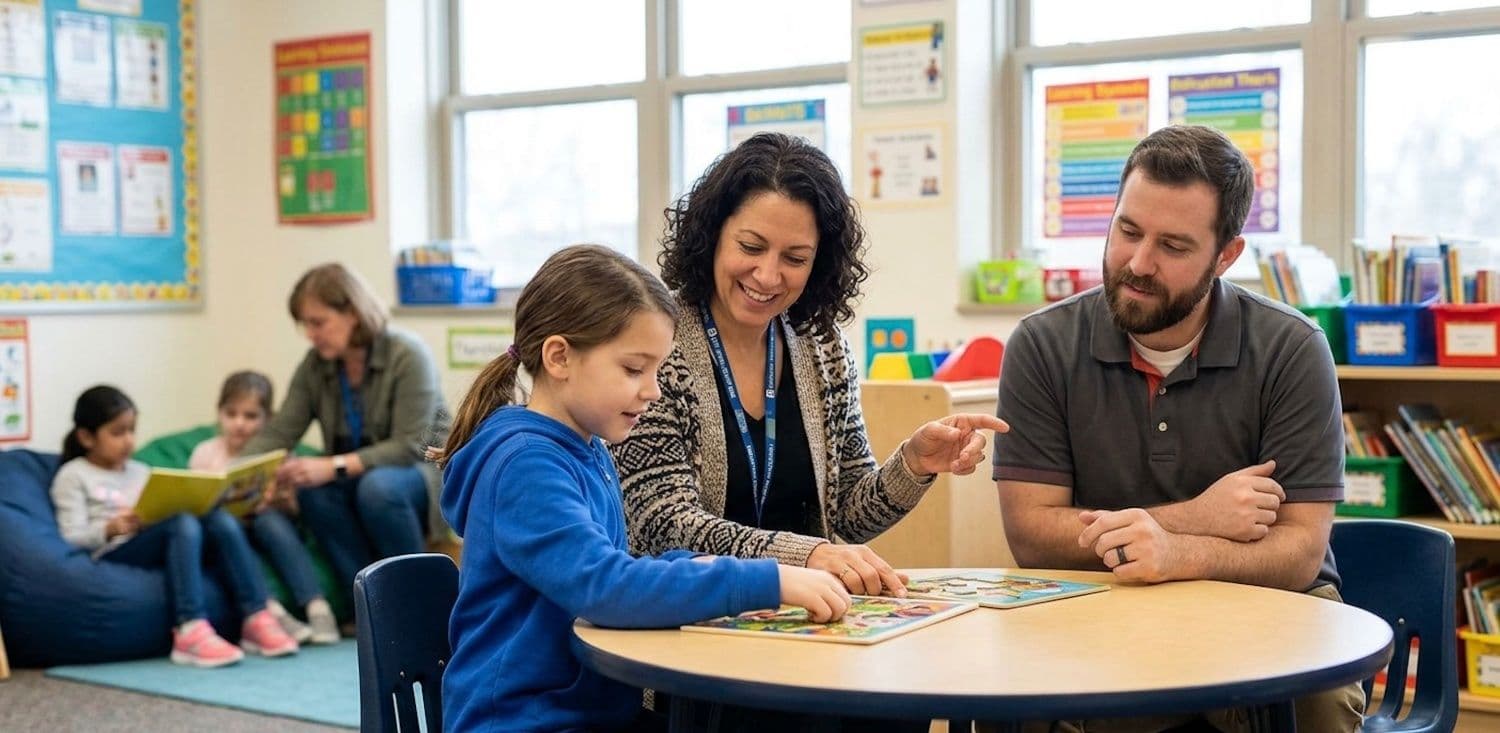
The student shouldn’t need that adult to start every task, calm every frustration, or run every transition. - Use small, steady handoffs: Try shared handoffs instead. Let the preferred adult open the routine, then pass one small piece to another staff member. Keep the script the same. Keep the reinforcement the same. Keep the expectations the same.
- Notice the small shifts: Now, proceed to take mental notes. Can another adult give the first prompt while the trusted adult stays nearby but silent? Can the student complete attendance, unpacking, or a two-minute warm-up with someone else first? Data like this is gold.
The goal is instructional flexibility, not sudden separation.
3) Fade prompts that belong to a person
- Look for the cues teams often miss: Reducing verbal prompts doesn’t mean you’re fading supports effectively. The student might still be relying on the adult’s presence, body language and timing. Those count too! Look for such overlooked cues and then proceed with fading them gradually.
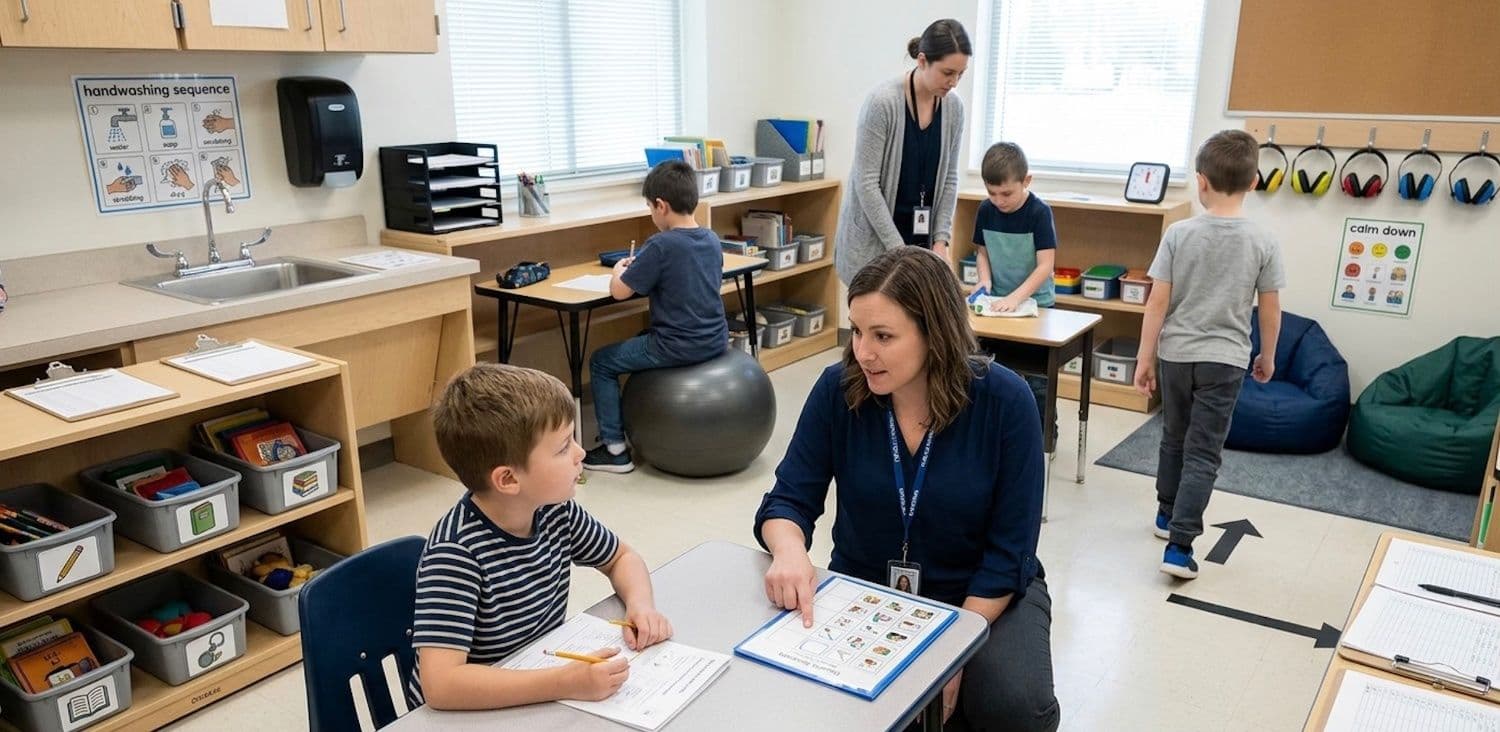
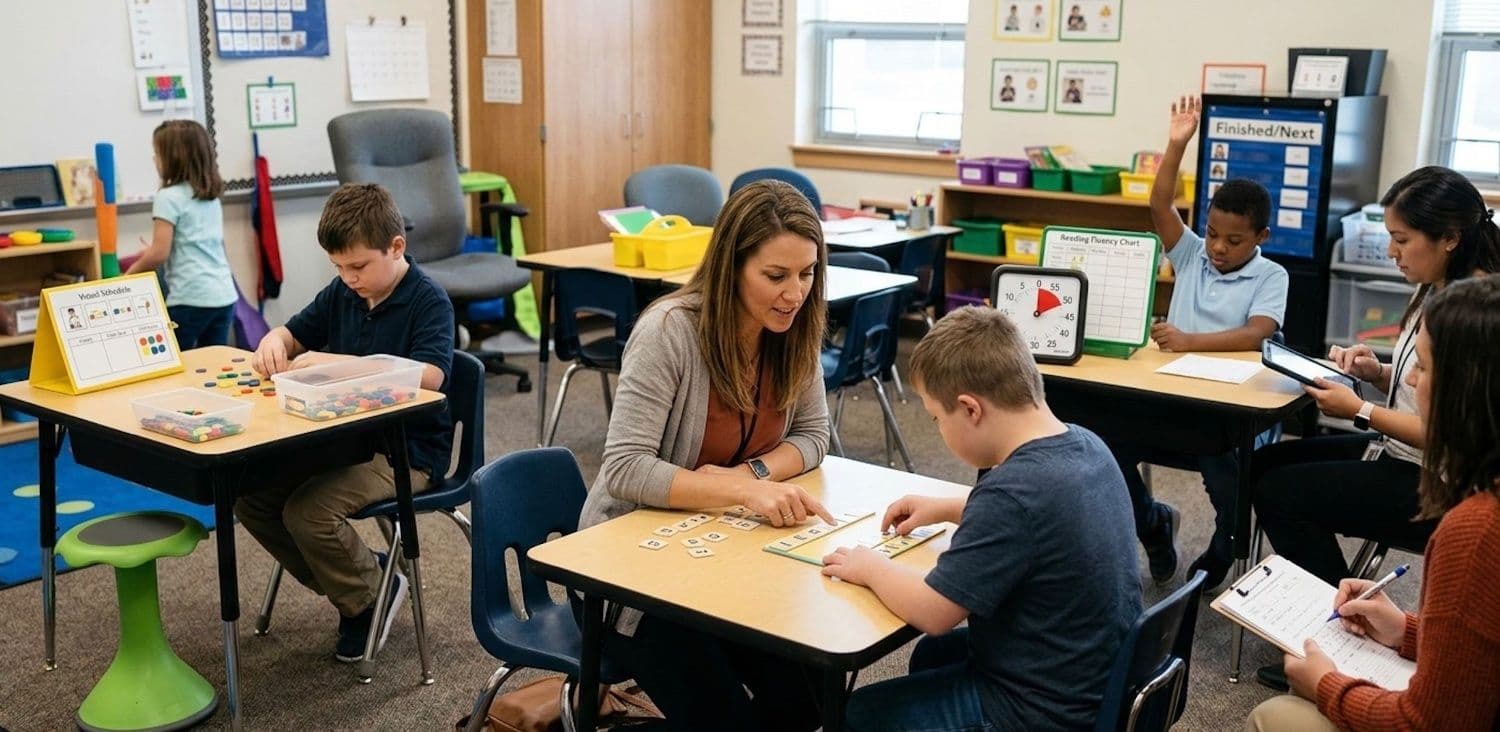
- Move the support into the routine: Start using visuals, checklists, first-then boards, timer cues and brief routine cards. Our goal here is to make directions live in the environment, not with an adult. While you’re at it, make sure the student stays successful as the prompts are being faded.
The key here isn’t to step away and hope for miracles. It’s to tweak supports such that they remain system supported, not person dependent.
4) Support the student through the moment of transfer
- Prepare the switch before it happens: Some students can handle different adults. They just don’t do well with surprises, sudden switches and less readable routines. Their anxiety level spikes even before a new demand is introduced. The solution here is to prepare them before such transitions happen.
- Name what is changing and what is not: Name who is taking over. Also, tell them what stays exactly the same. Give them a short script that keeps them aligned. For example, “Ms. Amy is helping with reading now. Same table. Same first task. Same break card.”
Repeating such brief and consistent exercises before every handoff gives the staff a concrete step to follow every time one adult leaves and another steps in.
5) Make staff consistency visible, not assumed
You cannot expect a student to build flexibility if the adults around are unpredictable. This doesn’t mean they need to have the exact same personality. It just means that the key supports must travel. The student must experience the same accommodations, replacement behaviour prompts, reinforcement rules and transition language throughout.
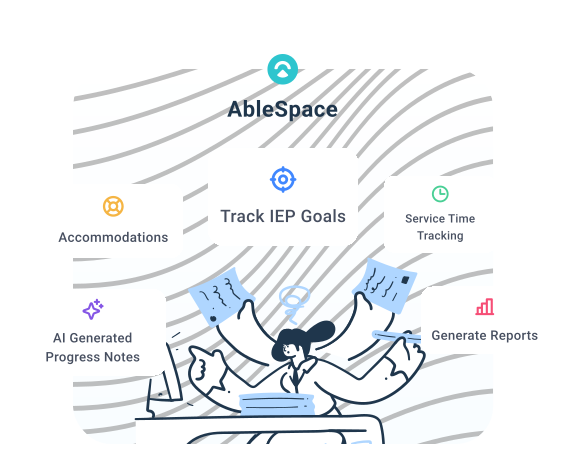
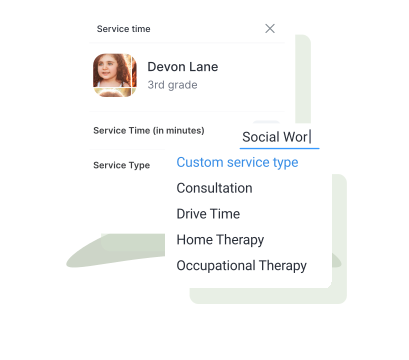
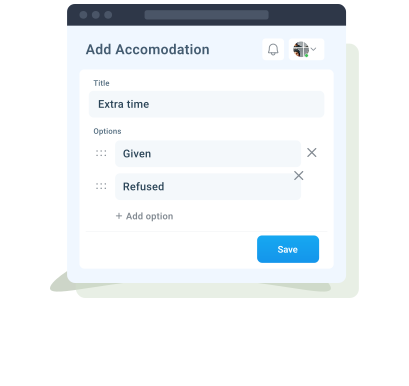
Pro Tip: When teams are juggling service minute logs, IEP goals, behavior data, and daily coverage changes, inconsistency sneaks in quite easily. In such times, AbleSpace can help staff track accommodations, log service minutes, monitor IEP progress, and keep documentation aligned so students aren’t getting five different versions of the same plan across the day.
Wrapping Up
Kids who see one adult as the anchor will find the classroom smaller than it really is. Their circle of safety has to widen if they’re to find more room for coping and recovering from changes. That’s how we can make support stronger and steadier over time.