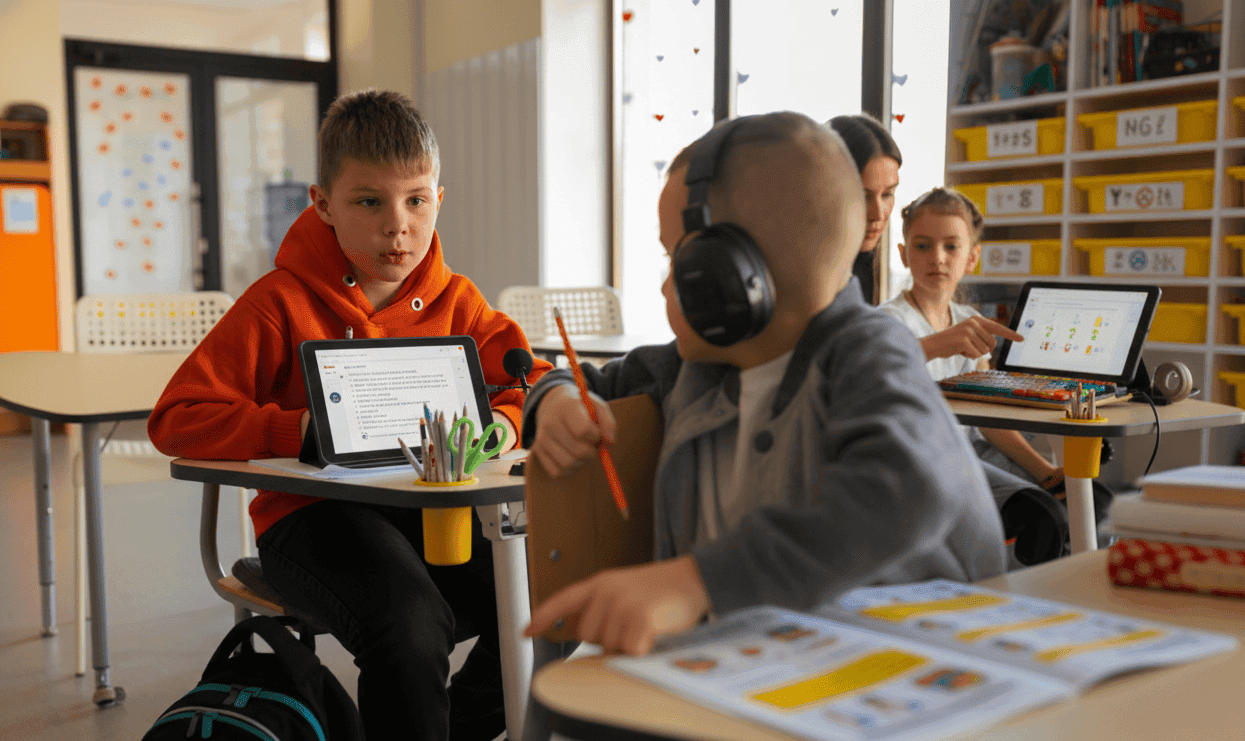
A student walks in with an IEP full of support, a team full of hope, and accommodations designed with care. On paper, everything is ready. In class, the student shrugs it off, avoids the help, or acts like the support doesn’t exist.
It looks like resistance. It feels like avoidance.
But it’s almost never that simple.
Across middle and high schools, students quietly “ghost” the very accommodations meant to level the playing field. It’s easy to assume they don’t want the help, but the truth is far more layered. Most students aren’t rejecting support, they’re reacting to what it costs to use it.
Understanding that gap is the difference between paperwork compliance and real access.
Reason 1: The Accommodation Signals “Difference,” and Visibility Feels Risky
By adolescence, peer perception becomes one of the strongest forces in a school environment. Any accommodation that draws attention, such as extended time, leaving a room, using a scribe, or getting break passes, can make a student feel exposed.
Even when staff view the support as normal and appropriate, students may experience it as a spotlight.
Research on stigma and self-determination consistently shows that students often avoid beneficial support if that support appears to separate them from their peers. The fear of looking “different,” “slow,” or “dependent” can outweigh the academic struggle.
This is not defiance. It is self-protection.
Accommodations that reduce visibility, including embedded tools, in-class supports, digital assistive features, and co-taught routines, tend to have dramatically higher usage.
Reason 2: The Accommodation Arrives at the Wrong Moment
Students may understand their accommodation, but timing matters.
If a student is offered support:
- after they already feel overwhelmed,
- in front of peers,
- during a moment of dysregulation, or
- in the middle of an academic task that triggers frustration,
they are far less likely to accept it.
Human behavior research shows that interventions introduced during stress are usually rejected, even when helpful. Students need accommodations pre-framed, timed, and delivered in a rhythm that feels predictable, not reactive.
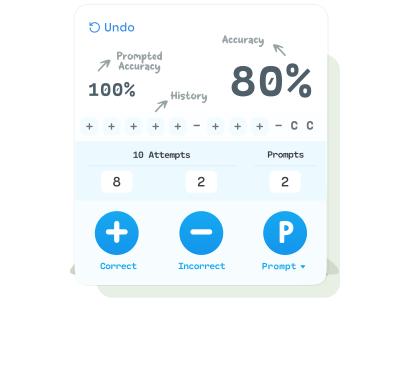
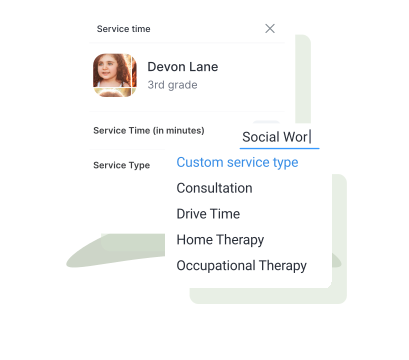
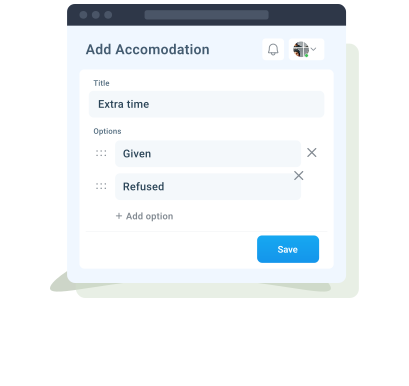
This is where digital accommodation tracking becomes powerful. When staff can identify patterns in classes, times of day, and tasks that trigger refusals, they can adjust delivery proactively. Many teams use tools like AbleSpace to track usage patterns discreetly, helping them reduce uncertainty and offer support before struggle escalates.
Reason 3: The Student Associates the Accommodation With Past Failure
Students carry memories of every time support was misunderstood, misused, or misapplied. A reader may associate audio support with embarrassment during elementary school. A student with processing differences may connect extended time to feelings of being “behind.” A student with anxiety may remember a previous pull-out where they missed instructions and felt lost.
These memories shape future behavior.
Adolescents often avoid accommodations not because they dislike the support, but because they dislike what the support reminded them of.
Rebuilding trust means reframing the accommodation in today’s context, not yesterday’s experience. Students need to see how the support fits their current identity, academic level, and goals, not an outdated version of themselves.
Reason 4: The Accommodation Doesn’t Match the Task’s Real Cognitive Load
Sometimes an accommodation looks appropriate on paper but doesn’t truly address the barrier in front of the student.
For example:
- Chunking may help with reading volume but not with working memory demands.
- A calculator may support math facts but not conceptual reasoning.
- Preferential seating may reduce distractions but not internal anxiety.
Students “ghost” accommodations when they sense, often before adults do, that the support doesn’t solve the actual problem.
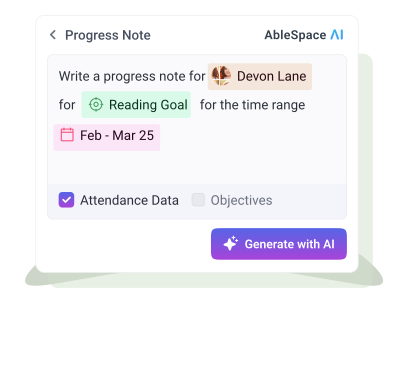
Usage increases when accommodations align with the cognitive, emotional, or sensory barrier driving the challenge. This is where high-quality progress notes and real-time classroom data matter, because mismatched accommodations often reveal themselves through inconsistent performance and repeated refusals. Systems that centralize these patterns, such as AbleSpace, help teams see the mismatch earlier and adjust supports before students give up on them entirely.
Reason 5: The Accommodation Requires Executive Function They Don’t Yet Have
“Just ask for a break.”
“Let me know if you need help.”
“Use your notes when you get stuck.”
These sound simple. But for many students with ADHD, autism, learning disabilities, or anxiety, they are cognitively heavy tasks.
Asking for an accommodation requires:
- self-awareness,
- emotional regulation,
- situational judgment,
- oral communication under stress,
- and trust that the adult will respond supportively.
That is a tall order.
When accommodations depend on student initiation rather than embedded delivery, usage drops dramatically. The accommodation is not “unused”; it is inaccessible.
The most effective supports are those built into the environment without requiring the student to self-advocate 15 times a day.
Final Word
Every unused accommodation is a clue about the future students want for themselves. Some want independence, some want privacy, some want belonging. Understanding these motivations helps teams design supports that guide students toward that future instead of pulling them away from it. The real goal isn’t compliance today, but capacity tomorrow.
FAQs
1) Do students with strong self-advocacy skills still ghost accommodations?
Surprisingly, yes. Even confident students may avoid supports when peer dynamics shift or when the accommodation conflicts with their desire to appear independent. Self-advocacy is contextual, not fixed, so students may need support even if they’ve used accommodations effectively in the past.
2) How can teachers tell the difference between genuine refusal and a student simply forgetting their accommodation?
Tracking patterns across classes or tasks helps distinguish between a one-off lapse and a consistent avoidance trend. If forgetting happens only during certain subjects or times, the barrier is usually emotional or cognitive, not memory-based.
3) How can educators make accommodations feel age-appropriate for older students?
Many refusals stem from supports that feel “elementary.” Reframing accommodations through tools that mirror typical adolescent behavior (such as digital organizers, embedded tech features, and integrated assistive tools) preserves dignity and increases usage. Adolescents respond better to supports that align with how their peers learn.