PLAAFP, PLOP, and Present Levels: Meaning, Examples, and How to Write Them
Team AbleSpace 10 min read
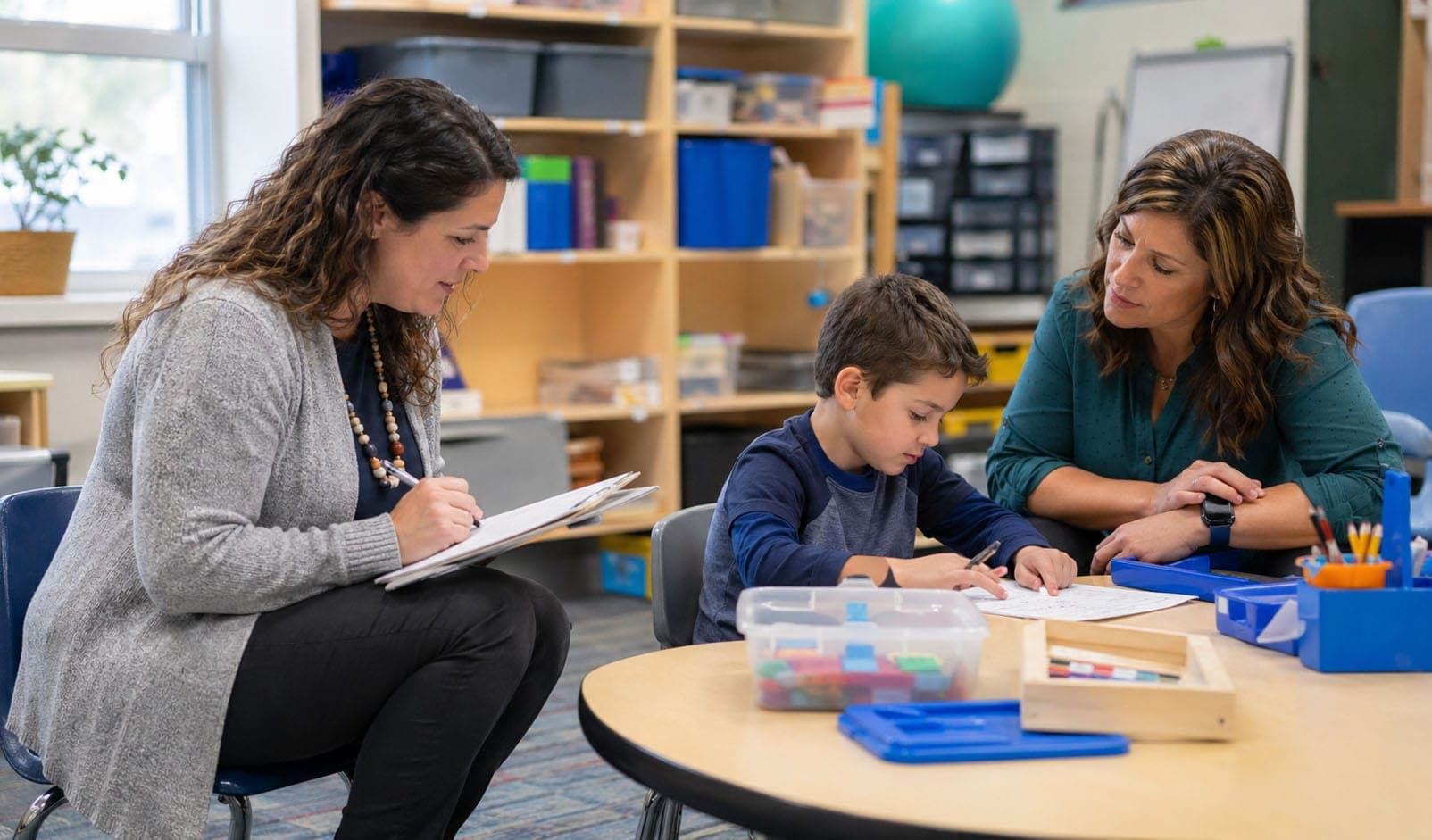
Every good IEP has one "quiet hero": the PLAAFP.
It isn't really flashy and doesn’t draw the dramatic meeting-table attention like goals, services, or accommodations do.
However, if the present levels section is written poorly, the rest of the IEP begins to wobble, just like a three-legged chair would.
The purpose of the PLAAFP statement is to provide the IEP team with a clear picture of the student's current functioning level, what they can already do, the areas where support is needed, and the effects of their disability on performance/participation. In essence, it is the “you are here” dot on the IEP map.
Without it, you end up with goals that are actually guesses. Services and interventions become vague and nonspecific. Progress monitoring gets haphazard. And your team spends the whole year wondering, “Wait, what exactly were we supposed to be working on?”
Let’s make sure that does not happen!
What Is a PLAAFP in an IEP?
PLAAFP means "Present Levels of Academic Achievement and Functional Performance".
It's basically an overview of the student’s current performance in school. It includes their academic abilities (such as reading, writing, and math) and functional performance areas (communication, behaviour, motor skills, social/emotional skills, independence, participation in the daily routines, etc.)
While some districts use a few slightly different terms (such as PLOP, PLP, PLEP or IEP present levels), they generally refer to the same area of the IEP: the portion that explains how the student is doing right now.
A good PLAAFP should answer 3 big questions:
- What can the student currently accomplish?
- What difficulties is the student experiencing?
- How does this impact access to the general education curriculum or the student's ability to participate in school?
That last question is important. A PLAAFP is NOT a list of scores. It needs to tell you what those scores actually mean in the classroom.
PLAAFP vs PLOP vs Present Levels: What’s the Difference?
The comparison of PLAAFP vs PLOP can feel more confusing than it has to be.
PLAAFP is the more complete term for describing "Present Levels of Academic Achievement and Functional Performance." PLOP generally refers to "present level of performance" and is an older or district-specific term.
The important distinction is that PLAAFP specifically covers both academic achievement and functional performance. This is critical because students do not only need support with testable academic skills. They may also need assistance with other areas of development, including attention issues, communication strategies, emotional regulation, transitions, fine motor activities, self-advocacy or daily routines.
Thus, if you are unsure, think of PLAAFP as the fuller, more comprehensive version of "where the student is now.”
Why PLAAFPs Matter So Much
PLAAFP statements are not background information. They represent the base layer of the IEP.
A high-quality PLAAFP connects directly to the student's baseline data, needs, goals, accommodations, services, and supports. If the PLAAFP states that a student struggles with inferential questions, then the reading goal should probably not focus only on decoding. If the PLAAFP states that a student avoids writing due to fine motor fatigue, then the team should not pretend this is only a motivation issue.
Good PLAAFPs help teams avoid random goals. They make the IEP feel connected instead of stitched together from separate pieces.
They also provide new team members with a quick understanding of the student. A teacher, therapist, paraprofessional or case manager should be able to read a student's PLAAFP and say, "Okay, I know what this student can do, what he/she needs, and where instruction should go next.
That's the goal. Not fancy wording. Not legal fog. Clear, useful information.
What Should Be Included in a PLAAFP Statement?
A strong PLAAFP statement should cover a good deal of detail about the student's strengths, academic needs, functional needs, objective baseline data, results from evaluations, the team's classroom observations, parent concerns, current skill gaps, and how the disability prevents them from progressing in the general education curriculum.
That sounds overwhelming, but it shouldn't turn into a huge data dump. Your goal here is to provide the team with enough information so you can make instructional decisions based on it.
1. Student strengths
Start with what the child can do. Strengths could include the student's academic skills, interests, learning preferences, social strengths, communication abilities, persistence, creativity, or response to certain supports.
Strengths often end up shaping instruction. So make sure you don't think of this as just some warm-up sentence!
2. Current requirements and skill gaps
Next, you'll have to identify the areas of need clearly. Do not use general terms such as "struggles to read" or "has behavioural problems." Instead, describe the specific gap in a student's required skills.
For example, "has difficulty determining the main idea from grade-level texts" is far better than “reading is hard.”
3. Baseline data
IEP baseline data examples can include: curriculum-based measures, classroom probes, work samples, behaviour frequency data, rating scales, therapy notes, observations, and evaluation results.
The data collected must demonstrate the student's starting point. Future progress will then be measured against it.
4. Educational impact of the disability
The PLAAFP needs to describe how the child’s disability impacts their learning, participation, independence, and/or their access to instruction.
For example: “This affects her ability to complete multi-step math assignments without adult support.”
That one sentence links the need to everyday experiences in school.
5. Connection to goals/services
Each significant need included in the PLAAFP should connect back to an annual IEP goal, service, support, accommodation or instructional plan. If a need is important enough to be placed in the document, the team should also be clear about what will happen next.
How to Write a PLAAFP Statement Step by Step
Here’s how to write a PLAAFP without transforming it into a wall of jargon and test scores!
1. Gather current data
Begin by using current data from classroom performance, past assessment results, observation records, therapy notes, parents' inputs, or recent progress monitoring. It doesn't matter whether or not you include every available detail. You just need details that can show where your student is now.
2. Identify patterns
Do not write a PLAAFP based on one poor test score or some random, difficult day at school. You'll have to identify what appears consistently.
Perhaps the student is perfectly capable of decoding accurately, but loses meaning in longer passages. Perhaps they can provide a verbal explanation, but struggle with organising their thoughts and ideas in writing. Trends and patterns like these share the true picture of a kid's academic profile.
3. Separate the skill need from the support
“Needs graphic organisers” is a support. “Has difficulty organising ideas into a clear paragraph” is the skill need.
“needs frequent breaks” is a support. “has difficulty sustaining attention during independent work for more than 8 minutes” is the skill need.
Name the need first. You can then describe what helps. This will make the PLAAFP much easier to connect with the goals.
4. Translate data into classroom reality
Data matters, sure. But it should not just sit there looking all official.
Rather than only writing "scored below average in written expression", show what that looks like in class. Does the student write one sentence when peers write a paragraph? Do they need prompts to begin? Do they lose track of the topic?
The best PLAAFPs translate data into daily school reality.
5. Use parent-friendly language
A PLAAFP has to be clear to parents, teachers, therapists and support staff. So, make sure you use easy-to-understand language, specific details, and a respectful and considerate tone. Also, stay away from wording that might sound more like a label than a description.
6. Read it back and ask, “Can I write a goal from this?”
This is the ultimate test.
Once you've read the PLAAFP, your next step should feel pretty obvious. If the statement says your student has trouble answering inferential questions, organising a paragraph, initiating non-preferred tasks, or requesting help, the goal should develop naturally from that need.
If, at any point, you find yourself unable to write a clear goal from the PLAAFP, then it could probably use some more details.
PLAAFP Formula Teachers Can Use
Here is a simple PLAAFP formula:
Student can currently [specific skill] with [accuracy/support/data]. Student has difficulty with [specific need], which affects [classroom task or curriculum area]. The student benefits from [supports]. This area will be addressed through [goal/service/support].
Example:
Maya can solve single-digit addition problems with 85% accuracy when using counters. She solves two-digit addition with regrouping with 40% accuracy across three classroom probes. This affects her ability to complete grade-level math assignments independently. She benefits from visual models, guided practice, and step-by-step problem-solving support.
This works because it includes current skill, need, baseline data, educational impact, supports, and connection to instruction.
Nothing fancy. Just the right details in the right order.
PLAAFP Examples for Every IEP Area
Reading PLAAFP Example
PLAAFP examples for reading should include specific reading skills, not just a general reading level.
Aiden reads grade-level passages at 82 words per minute with 94% accuracy. He answers literal comprehension questions with 80% accuracy but answers inferential questions with 45% accuracy across three classroom probes. This affects his ability to explain character motivation, summarize grade-level texts, and answer written comprehension questions independently. He benefits from graphic organizers, teacher modeling, and guided annotation.
Writing PLAAFP Example
Sofia writes simple sentences with correct capitalization and punctuation in 4 out of 5 opportunities. She has difficulty developing a paragraph with a topic sentence and supporting details, completing this independently in 2 out of 6 writing samples. This affects her ability to complete grade-level written responses. She benefits from sentence starters, planning organizers, and verbal rehearsal before writing.
Math PLAAFP Example
Ethan solves single-step addition and subtraction word problems with 80% accuracy. He solves two-step word problems with 35% accuracy across recent classroom probes. This affects his ability to complete grade-level math assignments that require choosing operations and explaining reasoning. He benefits from visual models, problem-solving checklists, and guided practice.
Behaviour PLAAFP Example
Noah follows classroom routines independently during preferred activities. During non-preferred writing tasks, he leaves his seat or refuses work an average of 4 times per 30-minute period. This affects his ability to begin and complete written assignments. He benefits from previewing expectations, choice-making, scheduled breaks, and reinforcement for task initiation.
Communication PLAAFP Example
Mia uses 3- to 5-word phrases to request preferred items and answer familiar questions. She has difficulty explaining needs, retelling events, and asking for help during classroom activities. This affects participation in group work and independent task completion. She benefits from visual sentence supports, wait time, and modelled language.
Social-Emotional PLAAFP Example
Social-emotional PLAAFP examples should connect emotional skills to real school situations.
Jordan can identify basic emotions in pictures with 90% accuracy. During peer conflict, he has difficulty naming his own emotion or choosing a calming strategy, requiring adult support in 4 out of 5 observed incidents. This affects peer interaction and classroom participation. He benefits from emotion visuals, role-play, and a calm-down routine.
Functional Skills PLAAFP Example
Functional performance examples IEP statements may include independence, routines, organisation, or daily living skills.
Lily follows a visual morning routine with one adult prompt. She has difficulty organising materials between activities and requires 3 to 4 prompts during transitions. This affects her ability to arrive prepared for instruction. She benefits from a visual checklist, labelled materials, and transition reminders.
Fine Motor PLAAFP Example
A strong fine motor PLAAFP example includes classroom impact.
Arjun can copy short words legibly with lined paper and visual cues. He has difficulty writing longer sentences, with letter size and spacing becoming inconsistent after 5 minutes of writing. This affects written assignment completion. He benefits from pencil grips, shortened writing chunks, and access to keyboarding for longer responses.
Transition PLAAFP Example
A useful transition PLAAFP example focuses on postsecondary skills.
Marcus identifies two career interests and can describe one job task for each. He has difficulty identifying training requirements, workplace expectations, and the steps needed after graduation. This affects his ability to plan for postsecondary employment. He benefits from career exploration activities, visual planning tools, and guided practice with self-advocacy.
Weak vs Strong PLAAFP Examples
Weak:
Jayden struggles with reading comprehension.
Strong:
Jayden reads grade-level passages with 70% accuracy when answering literal comprehension questions and 45% accuracy when answering inferential questions across three classroom probes. He benefits from visual organisers and teacher-guided annotation. This affects his ability to independently summarise grade-level texts and answer written comprehension questions.
See the difference? The weak version tells us there is a problem. The strong version tells us what the problem is, how we know, how it affects learning, and what helps.
That is the sort of detail that makes PLAAFP examples truly useful.
Common PLAAFP Mistakes to Avoid
1. Using Vague Language
Words such as "struggle," "poor, "low," or "below grade level" need more details. What skill? How often? With what support? Compared to what expectation?
2. Copying last year’s present levels
Students change over time, as do their skills, needs and abilities. Therefore, listing out last year's IEP present levels isn't really a wise move. In fact, it can make the IEP feel disconnected from the student sitting in the classroom today.
3. Including test scores without providing contextual information
A test score can be valuable. However, it needs meaning. Which is why the PLAAFP should also explain what that looks like in class.
4. Not including functional performance
Academics matter. But so do communication, behaviour, independence, social participation, motor skills, sensory needs, and transitions.
5. Failing to include baseline data
Without some form of baseline data, you cannot develop measurable goals nor assess whether your student has made any progress. “Needs help with writing” isn't enough. “Writes a complete paragraph independently in 1 out of 5 samples” gives the team a decent starting point.
How PLAAFP Connects to IEP Goals
The purpose of the PLAAFP is to show us where the student is now. The annual IEP goals tell us where he/she should go next. Then, through ongoing progress monitoring, we get to know whether the student is growing toward the set goals.
Remember this:
PLAAFP → current performance
IEP Goal(s) → targeted growth
Services & Supports → the path for getting there
Progress Data → indication of movement
The IEP's clarity improves greatly when all of these components begin to connect.
Bonus point: AbleSpace and other such tools can make it simpler for teams to collect baselines, IEP goals, accommodation data, and progress notes, all in one spot. This way, the PLAAFP can be informed by evidence from the actual classroom (not last-minute memory or data hiding in five different corners of the school day). Additionally, AbleSpace’s AI can also generate present-level statements, thus giving educators a good first draft to tweak and build on.
PLAAFP Checklist for Teachers
Before wrapping up the PLAAFP statement, ask yourself the following questions:
- Does it describe the student’s strengths?
- Does it include current academic and functional performance needs?
- Does it include objective baseline data?
- Does it explain how the disability affects access to the general education curriculum?
- Does it include parent and teacher input?
- Does it avoid vague wording?
- Does each need connect to a goal, support, service, or accommodation?
- Is it updated from the previous IEP?
- Can a new team member understand the student’s current performance from just this section alone?
A strong PLAAFP does not have to sound fancy. It just has to be clear, up-to-date, specific, and useful.
That is what turns present levels from “that section we fill out before the goals” into the reason the goals make sense.