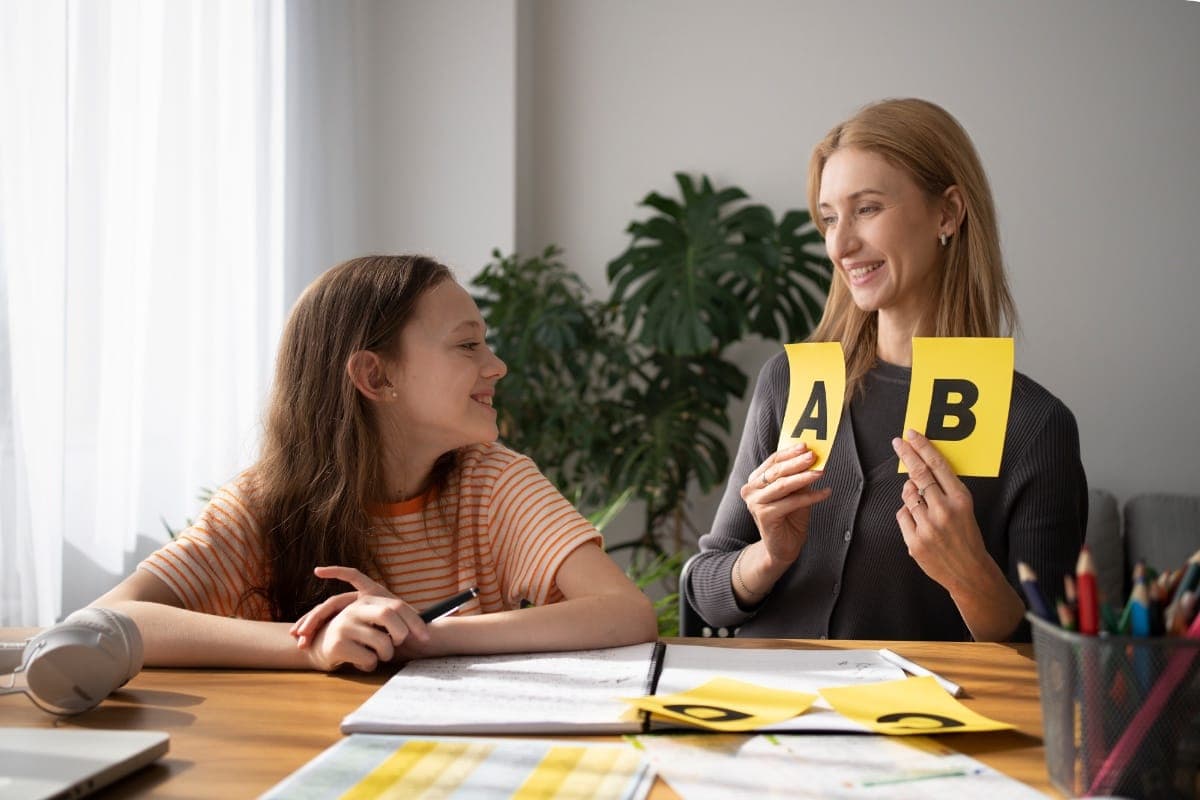
A student walks in with an IEP full of support, a team full of hope, and accommodations designed with care.
On paper, it all seems great. Yet in the classroom, they shrug it off, ignore the help that is being offered, or outrightly reject the accommodations!
It looks like resistance. It feels like avoidance.
But it’s never really that simple.
Kids “ghost” their accommodations across all school levels.
Teachers think they do not want the assistance. But the truth is much more layered than that. Most students aren’t rejecting support. They’re simply reacting to the costs of utilising it.
Understanding that gap is the difference between paperwork compliance and real access.
Reason 1: The Accommodation Signals “Difference,” and Visibility Feels Risky
By the time adolescents reach high school, peer perceptions become an extremely strong force. Any type of accommodation that draws additional attention, for example, extended time, leaving a classroom, using a scribe, etc., can put a student into the “spotlight”.
Staff may find the assistance perfectly acceptable; however, many kids will view this help as drawing attention to themselves.
Students generally don’t seek out beneficial support if they think it will separate them from their peers. The fear of seeming different, slow or dependent in the eyes of their peers can cause them to accept the difficulties associated with academics over accepting supportive accommodations.
It’s not defiant behaviour. It is just self-protective behaviour.
Accommodations that reduce visibility, including embedded tools, in-class supports, digital assistive features, and co-taught routines, tend to have much higher usage.
Reason 2: The Accommodation Arrives at the Wrong Moment
The timing also makes a difference to students.
Students may have understood the type of support they’ll be receiving as an individualised accommodation. However, if:
- The support arrives too late (i.e., after they feel overwhelmed),
- In front of their peers,
- While they are experiencing dysregulation, or
- During a specific academic task that causes frustration,
…the likelihood that the student will accept the support being provided gets significantly reduced.
Why?
Because interventions, which may otherwise be beneficial, are typically refused by individuals who experience high levels of stress at the time of the intervention.
Thus, students need accommodations to be proactively framed, scheduled, and presented in a manner that feels predictable.
Reason 3: The Student Associates the Accommodation With Past Failure
When a support is used incorrectly or misused, it can create a long-lasting memory.
For example, many readers might’ve had embarrassing moments using audio support in elementary school. In addition, students with processing issues who use extended time often feel like they are being “left behind”. Some students with anxiety may recall a prior pull-out session where they did not understand the instructions and felt totally lost.
These long-lasting memories influence future behaviours.
That’s why many adolescents don’t want to take advantage of accommodations. Not because they dislike the support itself. But because they associate it with past accommodations.
Rebuilding trust means developing a new perspective for the same accommodation based on today’s environment, not yesterday’s experience.
The student needs to see how the support helps them and their current academic goals.
Reason 4: The Accommodation Doesn’t Match the Task’s Real Cognitive Load
Some accommodations work in theory. However, they don't actually remove the barrier in front of the student.
For instance:
- Chunking might reduce the volume one has to read at once, but it does nothing to aid the student's working memory demands.
- A calculator can assist with math facts, but doesn't really enhance conceptual understanding of mathematical concepts.
- Preferential seating can minimise distractions, but not a student’s internal anxiety.
When students ghost accommodations, they may actually have sensed that the support won't work (sometimes long before the adults do).
Accommodation usage goes up when they are directly related to the cognitive, emotional, or sensory deficits that create the barriers. This is where high-quality progress notes and real-time classroom data can leave an impact, because mismatched accommodations often reveal themselves through inconsistent performance and repeated refusals.
Systems that centralise these patterns, such as AbleSpace, help teams spot these mismatches early enough and revise supports before students give up on them completely.
Reason 5: The Accommodation Requires Executive Function They Don’t Yet Have
“Just ask for a break.”
“If you need assistance, let me know!”
“Use your notes if you're stuck.”
These seem simple, don't they?
However, for students who have ADHD, autism, learning disabilities, or anxiety disorders, these tasks are cognitively heavy.
Asking for an accommodation requires:
- Self-awareness
- Emotional regulation
- Situational judgment
- Oral communication under stress
- And trust that the adults will respond positively and supportively.
That is a really tall order.
When accommodations rely on students' initiation and not embedded delivery, usage drops dramatically. The support is not just “unused”. It is inaccessible.
Good supports are those built into the environment without needing the kid to self-advocate 15 times a day.
Conclusion
Every unused accommodation is a clue about the kind of future students want for themselves. Some want independence, some want privacy, some want belonging. By understanding these underlying motivations, you can curate supports that will direct your students toward that future.
FAQs
1) Do students with strong self-advocacy skills still ghost accommodations?
Yes! Even confident kids sometimes forego accommodations if they conflict with their wish to appear independent. Because self-advocacy is contextual, not fixed, students may need help even if they were able to access accommodations perfectly in the past.
2) How can teachers tell the difference between genuine refusal and a student simply forgetting their accommodation?
Tracking patterns across classes or tasks helps separate one-off lapses from a larger pattern of avoiding supports. If a student appears to “forget” their accommodations only at specific times, the underlying barrier is likely cognitive/emotional, and not due to a lack of recall.
3) How can educators make accommodations feel age-appropriate for older students?
A big portion of refused accommodations are those that are perceived as too "elementary". Consider reframing accommodations through tools that mirror typical adolescent behaviour (such as digital planners, embedded tech features, and built-in assistive tools) to preserve dignity while increasing usage.